Dublin Summit: EU Leaders Press for Full Participation in Ukraine Loan
German and Swedish prime ministers argued that all 27 member states must contribute to a new funding package for Kyiv's 2027 budget.
By James Anderson ·

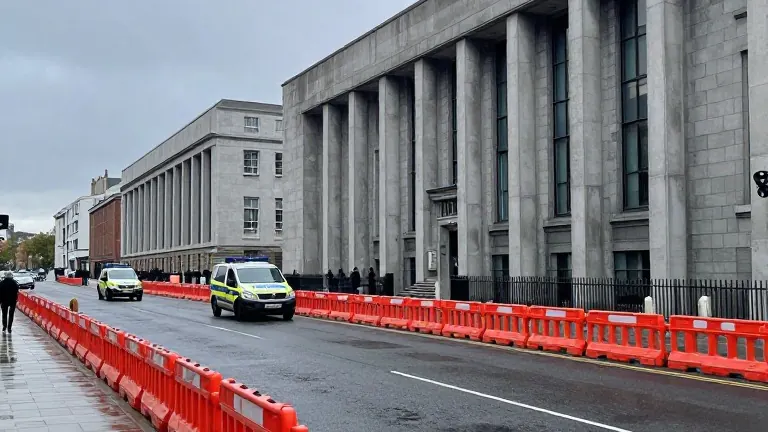
EU leaders gathered in Dublin on Friday to address a massive funding gap in Ukraine’s upcoming budget. The summit took place in the Convention Centre during the second day of meetings under Ireland’s presidency of the Council of the EU.
The central issue is a €70 billion hole in Kyiv’s finances for 2027. This deficit stems from the war that began with Russia’s full-scale invasion in February 2022. EU leaders are being asked to cover €45 billion of this amount. The remaining funds are expected to come from the UK, Norway, Canada, and other western allies.
German Chancellor Friedrich Merz and other European prime ministers set a clear expectation for the process. They insisted that every member state must contribute to the new financial support package. This stance creates immediate tension with nationalist governments that have resisted sending money to Kyiv in the past.
Taoiseach Micheál Martin described an EU-backed loan as the most effective way to raise the necessary tens of billions of euro. He noted that borrowing as a bloc is the current method but stated it does not have to be the permanent solution.
Swedish Prime Minister Ulf Kristersson told reporters in Dublin that the group is open to discussing all solutions to help Ukraine survive the winter. He emphasized that all 27 member states must support the new aid package. Kristersson called it totally unacceptable for some countries to opt out of participation.
Three member states, Hungary, Slovakia, and the Czech Republic, refused to join a previous €90 billion loan agreed upon last December. That loan was the first instance of EU leaders taking on collective debt to finance support for Ukraine. Viktor Orban, Hungary’s prime minister at the time, allowed the other countries to proceed while his country sat out the payment.
Slovakia’s Robert Fico and Czech Republic’s Andrej Babis adopted a similar stance during that previous agreement. Both are populist leaders who have shown hostility toward sending aid to Ukraine. Hungary’s government has since changed, with Peter Magyar leading after winning elections this year. Magyar has worked to repair relations with Brussels but remains skeptical about providing further aid.
Bulgaria’s new prime minister, Rumen Radev, has also stated that his country will not take part in any common EU loan. The countries currently opposed to a new loan, including Bulgaria, are all net beneficiaries of the union’s common budget. They receive funds through agricultural subsidies or regional development funding.
Latvia’s Prime Minister Andris Kulbergs questioned why Europe was not tapping Russian assets directly. The previous loan was backstopped by €210 billion in Russian central bank assets frozen by Brussels sanctions. Kulbergs, whose country borders Russia, argued the EU should not use its own funds while Russian money remains available.
The terms of the previous loan allowed European countries to recoup borrowed funds from those Russian assets. Kulbergs described the Russian cash as lying on the ground, suggesting it should be used to replenish Ukraine’s coffers instead of drawing on European pockets.
More Politics · Dublin news · Report a business · Got a Story?