Europe's Surge in Canned Food Sales Driven by New Emergency Guidelines
Retail data from the UK and stock updates across France and Ireland show a sharp increase in purchases of shelf-stable items following recent government campaigns and a series of infrastructure failures.
By Ethan Mitchell ·
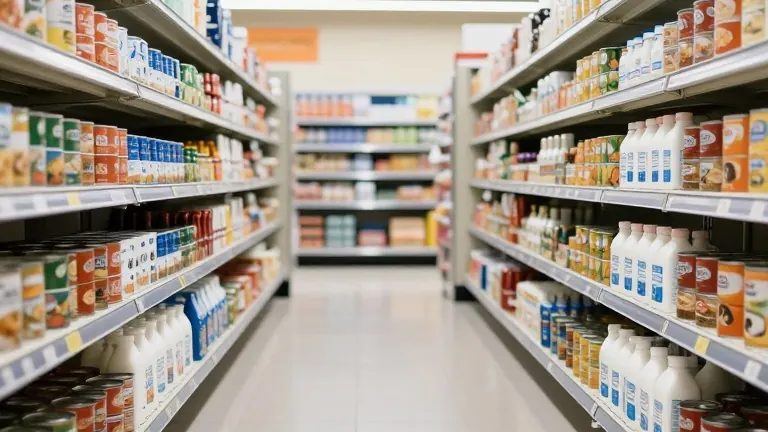
Retail sales in Britain rose for the month as shoppers scrambled to buy tinned food and long-life milk. The Office for National Statistics reported that the spike in these specific goods contributed to an increase in overall retail figures.
The buying rush followed the British government's release of a revised Be Ready checklist in late October. The update replaced a 2024 advisory that had received little attention. Officials issued the new guidelines while storms hit the south coast and a Microsoft outage disrupted email access for government agencies and hospitals.
Cyberattacks on supermarket refrigeration systems in eight European countries and hoax bomb threats in Italy, Ireland, and Poland also coincided with the announcement. These events led to grounded flights and school evacuations, contributing to public concern about daily vulnerabilities.
Ireland distributed Be Emergency Ready booklets to 2.2 million households in September and October. The Department of Defence advised residents to keep a battery-operated radio, a physical map, and two to three litres of water per person. The initiative followed Storm Éowyn in January 2025, which left 768,000 households without power.
France updated its 72-hour emergency kit instructions in September to include spare keys, extra prescription glasses, and games. Finland announced it would begin similar household distributions, while the European Union planned an annual Preparedness Day.
Retailers have adapted to the shift in consumer behavior. Colruyt, a Belgian grocery chain, now sells disaster food packages containing prepared meals, muesli, tissues, a spoon, and a heating system. An Italian maker of the ER300 Pro, a device combining a flashlight, radio, and power bank, reported a boom in sales.
Daniel Monger, 24, who lives in a village in the English Midlands, packed his first emergency kit a few weeks ago. He said the government campaign served as a wake-up call and began selling assembled kits after struggling to find specific products. "It does just feel like we’re entering a phase of uncertainty where you don’t properly know what’s going to happen," Monger said.
Survivalist Darren Rhodes, who moved to a power-failure-prone village in east England in 2019, runs a newsletter with the tagline "Prepared. Not Panicked." He noted that nearly half of his subscribers are now women, a demographic shift from the traditionally male customer base. "With the release from the government, it’s just made me seem to other people like less of a nutter," Rhodes said.
Beverley Griffiths, a lecturer in emergency planning at Buckinghamshire New University, said individuals are now expected to prepare for potential disruptions. "We’re starting to see small signs, shall we say, of something bigger coming, and it’s beholden on every individual to get themselves prepared," Griffiths said.
In Poland, Katarzyna Milochna-Mikulska, 43, teaches survival workshops and keeps a bag with her parents' medication, a paper map, and insurance documents. She recommends vodka and cigarettes for bartering and lists coffee as her non-negotiable item. "There’s a war just across the border," Milochna-Mikulska said.
More Business · Dublin news · Customer Complaints · Report a business · Got a Story?