Gardeners Turn to Eight Tree Varieties for Year-Round Visual Interest
Irish horticulture experts recommend species with durable bark, persistent berries, and decorative foliage to maintain aesthetic appeal during the colder months.
By Nadia Khalil ·
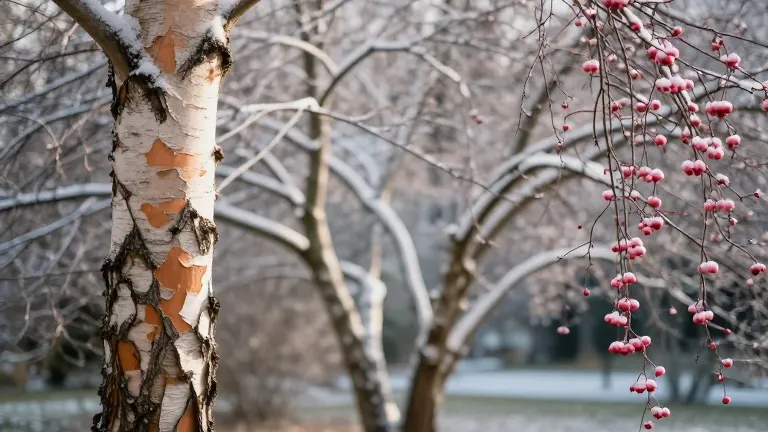
Eight specific tree species provide continuous visual interest in Irish gardens throughout the winter season.
Horticulture professionals identify these varieties as effective tools for mitigating the visual impact of cold weather. The selection prioritizes trees that maintain structural beauty, decorative bark, or persistent fruit when deciduous neighbors shed their leaves. Each species offers distinct characteristics suitable for different garden conditions across the country.
The snowy mespil, scientifically known as Amelanchier lamarckii, serves as a primary example of a deciduous tree with strong winter presence. Gardeners value this hardy, multistemmed species for its sculptural branches and delicate twiggy stems. It thrives in moist, well-drained, slightly acidic soil and tolerates light shade, though it performs best in full sun. The tree produces spring blossom and rich autumn foliage, adding multiple seasons of color.
For coastal gardens in mild, sheltered areas, the Himalayan strawberry tree, or Cornus capitata, offers decorative appeal. Climate change has allowed this small evergreen dogwood to survive in cooler parts of Ireland where it previously struggled. Its strawberry-pink fruits ripen in late autumn and remain on the branches through winter. The tree also produces pale, decorative flowers in spring.
Birch trees, specifically Betula ‘Kansu’ and Betula ‘Fascination’, provide visual texture through their peeling bark. These hardy, deciduous trees display shades of cream, cinnamon, pink, and copper. They tolerate exposed conditions and average fertility soils, reaching heights of 12 meters and widths of 6 to 8 meters after 20 years. The paperbark maple, Acer griseum, similarly features striking peeling bark with a Negroni-cocktail color. It requires a sheltered spot in full sun and produces colorful autumn foliage.
The Tibetan cherry, Prunus serrula, is prized for its conker-brown peeling trunk. To maximize its appearance, gardeners should place it against a contrasting background in a bright, sheltered location where winter sun can reach it. This small, deciduous tree tolerates most soils except those prone to winter waterlogging and offers pale spring blossom and fiery autumn color.
The coral bark maple, Acer palmatum ‘Sango Kaku’, distinguishes itself with coral pink branches that become visible after leaves fall in winter. This slow-growing Japanese maple requires dappled shade, shelter, and deep, humus-rich, moist but free-draining soil with a neutral to acidic pH. The box-leaf azara, Azara microphylla, is a small, evergreen tree native to South America that suits town gardens with protected microclimates near high walls or fences.
The Sorbus vilmorinii completes the list as an ornamental rowan that produces cloudy pink berries in autumn. These berries persist into winter, fading to near white. The tree tolerates a wide range of growing conditions and provides pink spring blossom and richly colorful autumnal foliage. Local gardening events include a Christmas Wreath Workshop at RHSI Bellefield in Shinrone, County Offaly, on December 4 and 5, and an Eco Christmas Craft Market at the National Botanic Gardens in Dublin 9 on December 12 and 13.
More Culture · Dublin news · Report a business · Got a Story?