Ireland imports most onions, frozen chips, and carrots despite local farming
New data reveals that Irish shoppers rely heavily on foreign produce for staples, with only a small share of onions, apples, and frozen potatoes grown within the country.
By Ethan Mitchell ·
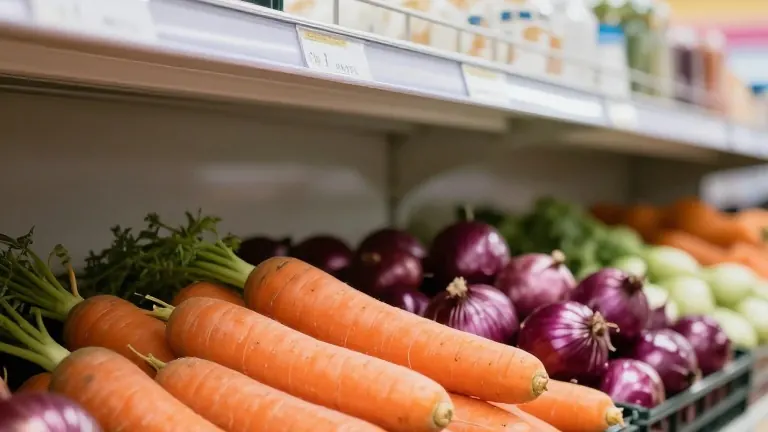
Shoppers in Ireland buy a significant amount of their core vegetable staples from abroad, new industry data shows. While fresh potatoes are predominantly home-grown, the onions, frozen chips, and carrots found in supermarket freezers and produce sections largely originate from other European nations or distant markets.
The reliance on imports stems from a mix of climate constraints, high storage costs, and shifting consumer preferences. For onions, 45,000 tonnes were imported in 2024, leaving local self-sufficiency below 30 percent. Dermot Callaghan, head of horticulture at Teagasc, notes that the market is volatile and requires heavy investment in drying and refrigerated storage. The High Court ruling in October, which held a Cork potato grower liable for business rates on storage facilities, has further complicated the economics for local producers.
Apples present a similar challenge. Approximately 95 percent of apples consumed in the Republic are imported, with France, South Africa, New Zealand, and South American countries as major sources. Although the climate suits varieties like the Gala, Irish growers have struggled to compete with cheaper imports from the southern hemisphere. Teagasc has run a research program since 2022 to improve the competitiveness of the local apple sector, and new orchards in Meath and Tipperary are beginning to bear fruit. Emer Gallahar Hall, senior manager of horticulture at Bord Bia, states that a new orchard planted in 2019 is now coming to fruition, though domestic demand remains high.
Frozen chips tell a different story from fresh potatoes. While over 380,000 tonnes of potatoes were grown in Ireland in 2025, the country imported 120,000 tonnes of prepared and preserved potatoes in 2024. Ireland lacks a domestic chip manufacturing industry, relying instead on processors in the Netherlands, France, Belgium, and the UK. Gallahar Hall explains that specific potato varieties are required for freezing and frying, a process that is more complex than home preparation.
Carrots are the closest to self-sufficiency, with an estimated 75 percent of supply coming from domestic growers. However, the country still imported 28,800 tonnes of carrots and turnips in 2024, valued at 27 million euros. The local season runs from July to April, with a supply dip often occurring in June. The domestic industry has contracted significantly; Hughes Agriculture in Kilkenny, which produced 12 percent of the country's carrots, closed earlier this year. The Irish Carrot Growers (Working) Group reports that production costs have nearly doubled since 2020, while retail prices have risen by only 40 percent, leaving just nine commercial growers in the country.
Supermarket buyers are increasingly looking to local suppliers to stabilize their supply chains. Callaghan points to weather and logistics issues in southern Europe as drivers for this shift. He notes that supermarkets are building longer-term relationships with Irish growers to mitigate shortages. The focus on local production is part of a wider effort to support the 240-plus Bord Bia-assured growers in the state.
More Business · Dublin news · Customer Complaints · Report a business · Got a Story?