Ireland rugby team faces lineup puzzle and defensive scrutiny
Coach Andy Farrell must decide on a starting fifteen for the next match as injuries and performance questions mount.
By Nadia Khalil ·
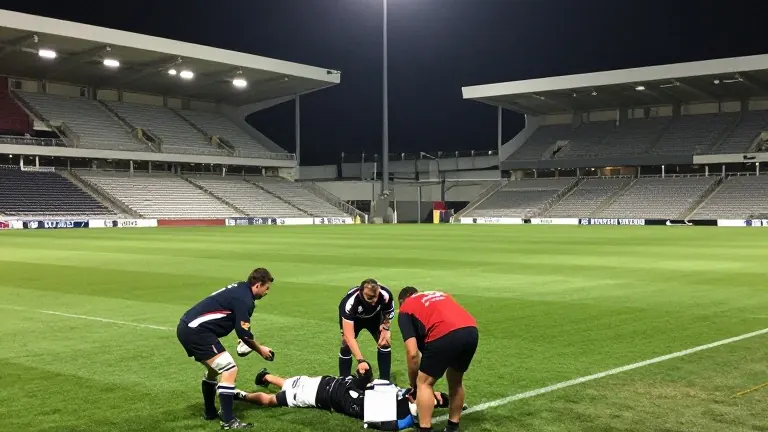
The Ireland rugby union team faces a difficult decision on its starting lineup ahead of its next match in the Nations Championship.
Head coach Andy Farrell must choose a player for the number 13 jersey. Garry Ringrose is out of the tournament with a hamstring injury. Jamie Osborne suffered a pectoral injury early in Saturday’s game against Fiji. Osborne had previously played only one cap at outside centre against Georgia in Tbilisi. Farrell is likely to select between Robbie Henshaw and Bundee Aki. Both players are typically better suited to inside centre positions. Henshaw played at number 13 in the victory over Argentina. Aki moved to the inside position when Osborne left the field against Fiji. This shift allowed McCloskey to enter the game at number 12 from the bench.
The absence of healthy options at this position complicates Farrell’s planning. Tom Farrell and Jude Postlethwaite are also dealing with injuries. These absences limit the squad’s flexibility at the back line. The team’s recent results have drawn attention to specific tactical weaknesses and strengths.
Fiji head coach Jake White pointed to kicking statistics after the match. White noted that Ireland tends to lose when opponents kick the ball 31 times. Fiji kicked 21 times on Saturday. White also claimed that Ireland previously enjoyed a 45 percent return on kick receipts. That performance standard dropped against Fiji. The Irish team struggled to collect kicks effectively in that game.
Ireland’s defensive record in the red zone stood out in the data. The hosts averaged 3.1 points for every entry into the opposition 22 meter area. They made 14 entries in total. Fiji averaged 0.9 points for their visits. These figures highlight the efficiency of the Irish attack in close quarters. Another match in the tournament saw France beat South Africa. France averaged 2.6 points from eight entries. South Africa managed 1.5 points from 12 entries.
Rob Baloucoune’s speed played a major role in Ireland’s offensive plays. His pace forced defensive errors from Fiji players. Baloucoune’s turn of foot created space for teammates to score. He contributed to the first try by Tommy O’Brien. A Fiji defender turned inward, believing he could not cover the gap. Baloucoune passed to Mack Hensen, who then sent O’Brien over the line. Baloucoune also helped set up Hugo Keenan’s first try against Argentina. The winger did not score a third try in the Fiji game. He missed a potential score when he failed to catch a crosskick from Sam Prendergast.
Officiating decisions drew criticism from observers. Referees are increasingly influenced by external input from television match officials. This dynamic can dilute the authority of the on-field referee. The match between Ireland and Fiji lasted more than two hours. Some fans sought distraction during the long game. A Mexican wave moved through the stadium on the 66th minute and lasted about five minutes. Dialogue between referee Angus Gardner and TMO Mike Adamson at the Aviva Stadium confused some viewers regarding the final calls made.
Ireland will play South Africa in its next scheduled match. The coaching staff will finalize the squad based on injury updates. The number 13 position remains the primary area of uncertainty for the upcoming fixture.
More Sports · Dublin news · Report a business · Got a Story?