Irish herring gull population drops 90 percent in three decades
Dublin residents report increased aggression from the birds, while conservationists point to habitat loss and climate change as the primary drivers of the behavioral shift.
By Emily Brooks ·
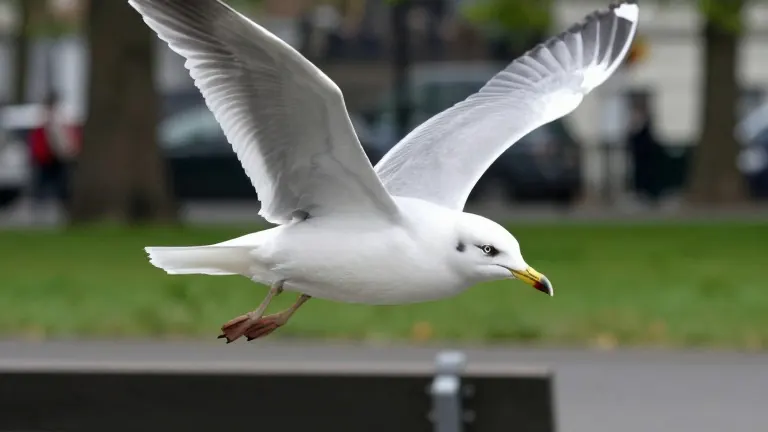
Dublin, Ireland. The Irish herring gull population has declined by 90 percent over the last three decades, according to Niall Hatch, head of communications and development at BirdWatch Ireland. The reduction in numbers has occurred alongside a rise in complaints from residents regarding the birds' behavior in urban areas.
The decline is attributed to multiple environmental pressures. Hatch cited warming ocean temperatures, pollution, and the destruction of fish stocks due to overfishing. He also noted that introduced predators such as rats and mink have overrun areas where the birds previously lived, fed, and bred. Hatch stated that 63 percent of Irish bird species are currently threatened.
Residents in Dublin have reported a pattern of aggressive interactions with the birds during the summer nesting season. A resident of Clare Hall in north Dublin contacted authorities in April regarding seagulls nesting behind their chimney. The resident described experiencing 10 weeks of sleep deprivation due to early morning squawking. They also reported that the birds were attacking their kitten and cat and spreading excrement over their house and cars.
In July, a homeowner in Coolock on Dublin’s northside complained to the National Parks and Wildlife Service about seagulls with three chicks nesting in their chimney. The homeowner stated that the birds had become highly aggressive, making it difficult to use the back garden without the danger of an attack. Another resident of an estate in Baldoyle, Dublin 13, wrote to the service in July about a pair of nesting herring gulls protecting their chicks.
The Baldoyle resident noted that children in the estate were provoking the birds by treating the swooping as fun. This interaction seemed to increase the birds' aggression, leading them to swoop at dog walkers and passersby who were unaware of the situation. The resident expressed concern that a young child might be harmed by the birds' sharp beaks.
The issue of gulls stealing food in public spaces gained national attention in 2014. Fianna Fáil senator Ned O’Sullivan told the Seanad that the city’s gulls had lost the run of themselves. He described the birds as scavenger gulls that were attacking young children and dispossessing them of lollipops. O’Sullivan demanded action, calling the birds vermin.
BirdWatch Ireland maintains that the gulls are a symptom of a larger ecological problem rather than the root cause. Hatch said that most urban gulls are naturally wary of people and prefer to forage in bins. However, some individuals have become skilled at stealing food from people. Biologist Éanna Ní Lamhna noted that the birds historically followed herring boats to eat discarded fish. With modern trawlers freezing catch on board, that food source has disappeared.
Ní Lamhna explained that flat surfaces on cliff tops, which gulls prefer for nesting, have often been converted into golf courses. This forced the birds into towns where they were attracted to rubbish in landfills. As landfills closed, the gulls turned to city center waste and eventually food in human hands. She described this as the result of removing their natural food and nesting places.
Gerry Farrell, deputy chief executive of Dublin Town, said the gull problem has diminished recently due to regulations reducing the use of plastic waste bags. He acknowledged that the gulls remain a nuisance for people eating lunch outdoors. Farrell stated that environmental protections for the species are unlikely to change soon, advising people to be careful when eating in public parks or on benches.