Kadouh family returns to burned home
Residents of Zawtar al-Gharbiyeh are facing severe destruction after Israeli forces withdrew under a U.S.-brokered plan.
By Ethan Mitchell ·
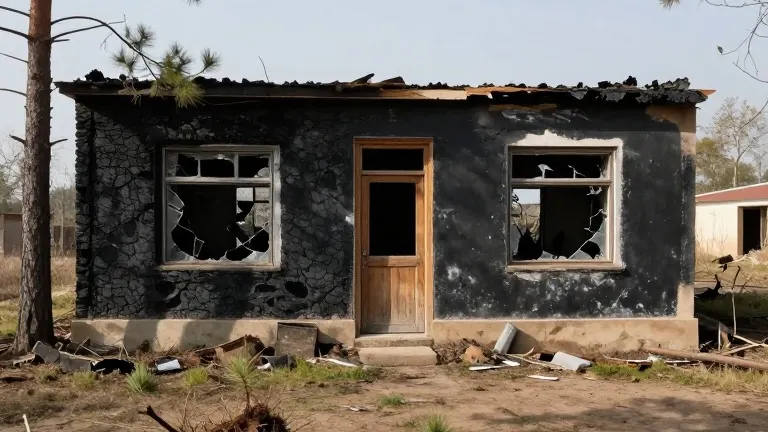
Atef Kadouh and his wife, Soumaya Yaghi, returned to their home in Zawtar al-Gharbiyeh in July to find it occupied by Israeli soldiers and subsequently set on fire. The village was the first test of a U.S.-brokered plan that required Israeli forces to withdraw while the Lebanese army took over security. The objective was to keep Iran-backed Hezbollah out of the area after the group began firing rockets across the border in solidarity with Hamas following the October 2023 attack on southern Israel.
Kadouh built the house after working for two decades in Saudi Arabia. He and Yaghi lived there for 40 years and had five children. They now have four. Their youngest son, Adel, was a sports teacher and basketball champion who planned to study for a doctorate in France this summer. Instead, he volunteered as an ambulance driver when the war began.
The Israeli military killed Adel and four other medics in a drone strike on March 28. The group was burying a 75-year-old man who had died in a hospital. Lebanon's Health Ministry says Israel has killed more than 135 first responders and medical staff in the past two years. The Israeli military stated that militants often pose as paramedics, but it did not respond to follow-up questions noting that the five were killed at a burial site, not inside an ambulance.
When the family returned, they found extensive damage inside the house. Blue marker names of Israeli soldiers were written on a hallway wall near scorched plaster. Bullet holes punctured the refrigerator, freezer, and washing machine. Furniture and appliances lay smashed on the ground below the second-floor balcony, where they had been pushed. Blackened food packets and rotting sandwiches lay on the kitchen floor. A missile propulsion unit with English markings was found in one of the rooms.
Kadouh said the Israeli military destroyed the solar panels, leaving the home without electricity or running water. The Lebanese army told them that many houses in the village had been rigged with explosives, including the Kadouh home. The army said it dismantled the explosives left by Israeli forces. The Israeli army stated that its policy bars burning homes or leaving explosives but did not reply to questions about why the Kadouh house was damaged.
Outside, the army used a bulldozer to uproot pine trees that provided a key cash crop of pine nuts. Yaghi pointed to the spots where olive, fig, and avocado trees once stood. The family also lost their tractor and garage. Kadouh said the level of destruction exceeded what satellite photos had suggested. He described the loss of the trees as the deepest cut.
Kadouh said the Lebanese state did not send soldiers to protect the village after the withdrawal. He noted that the local army is deliberately underequipped to avoid threatening Israel. He expressed frustration that the family has no essentials and must start from scratch. Yaghi said the family raised their children through hard work and education, and all became professionals.
The family remains in the village despite the damage. Kadouh said he was born there and prefers to live on the land. He said he does not expect peace in his lifetime under Prime Minister Benjamin Netanyahu. He asked that Israel bring back his son if it wants to be a good neighbor. Smoke still rises from a nearby village where attacks continue.
More News · Columbus news · Report a business · Got a Story?