Malahide-Donabate Greenway Cost Reaches €50 Million, Completion Slips to 2028
Fingal County Council and the Transport Minister attribute the price jump and schedule delays to complex engineering near the Broadmeadow estuary rail line.
By Emily Brooks ·
Fingal County Council projects that the cost of the new greenway linking Malahide to Donabate will reach approximately €50 million. This figure represents a €38 million increase from the €12 million estimate provided when the project received planning permission in May 2020.
Minister for Transport Darragh O’Brein confirmed the revised budget on Friday. He stated that the scheme is “probably touching on €50 million” and defended the expenditure as a major investment by the Government, the council, and Iarnród Éireann. O’Brein described the cost increase as a reality of inflation and noted that the project is a quality of life amenity that will also drive additional jobs and tourism in the area.
Construction is currently running about two years behind schedule. The original target for completion was early 2026, but the revised timeline now places the finish line in 2028. O’Brein said the delay is acceptable when weighed against the fact that the greenway is designed to last 150 to 200 years. He remarked that he is proud of the work completed and that a delay of 12 to 18 months is manageable.
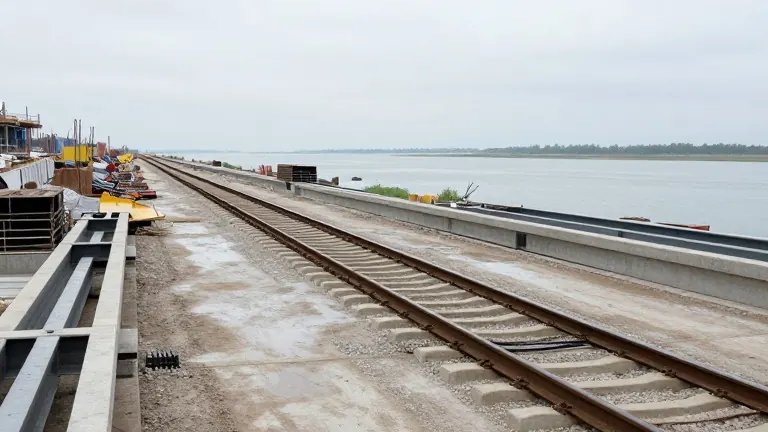
The 6km route runs from Malahide Castle to Newbridge House in Donabate. It flanks the Dublin to Belfast rail line across the Broadmeadow estuary. Approximately 2km of the path crosses the water, with 186m of that section built on a bridge. Fingal County Council called it one of the most technically complex greenway projects in the state due to the proximity of the active rail line.
Linda Lally, a senior engineer with the council, explained that protecting the national strategic infrastructure of the railway was a primary objective. The estuary is an EU-designated special area of conservation, and the rail viaduct is over 150 years old. These factors restricted construction to five months during the summer to avoid disturbing overwintering birds.
Works close to the rail line, where the gap is sometimes less than 2 meters, were limited to night-time hours. Lally noted that engineers could not pour concrete or use standard cranes in the confined space. Instead, they used precast concrete transported on specialist vehicles. The weir under the bridge, which controls water flow into the estuary, also had to be levelled as part of the build.
Ground investigations began in mid-2023, and construction started the following summer. By the end of 2024, project costs had already risen to €30 million. The idea for the greenway dates back 17 years to a rail bridge collapse that occurred minutes after a train had crossed the viaduct.
During the repair of that collapsed line, Iarnród Éireann sank 11 columns into the sea beside the railway track. This infrastructure was placed in anticipation of the future cycle path, which is now nearing its final phase of construction.