Ohio Senate passes bill requiring voter approval for traffic cameras
Senate Bill 340 mandates that city and village governments seek public consent before installing or renewing traffic violation cameras.
By Emily Brooks ·
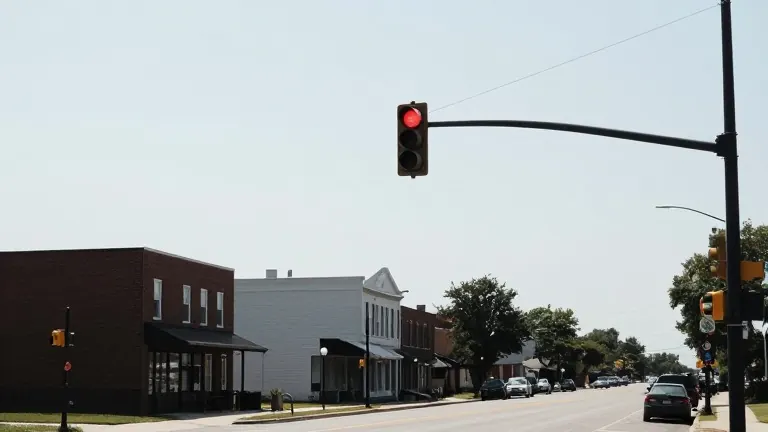
Residents of Ohio cities and villages would gain a direct say in traffic surveillance. Senate Bill 340, which passed the Ohio Senate on Wednesday, requires local governments to put specific camera plans to a public vote. This applies to cameras that monitor for traffic violations, such as those placed at red lights.
The bill does not cover Automated License Plate Readers, often referred to as Flock cameras. Those devices are the subject of House Bill 725, which remains in committee hearings. If passed, that separate measure would restrict the transfer and sale of data collected by license plate readers. It would also classify such violations as a first-degree misdemeanor, carrying potential jail time and fines up to $1,000.
Senate Bill 340 cleared the upper chamber with near-universal support. Only one Democrat, Sen. Paula Hicks-Hudson of Toledo, voted against the measure. Toledo suspended its own traffic camera program in 2022. That decision followed a unanimous ruling by the Ohio Supreme Court. The court upheld a law allowing the state to deduct from city funding an amount equal to the revenue generated by traffic cameras.
Sen. Tom Patton of Strongsville, a Republican, introduced the bill. He has long advocated for restrictions on traffic cameras. During his testimony on Wednesday, Patton noted that voters have historically rejected such cameras in more than 91% of elections. He described this pattern as a clear message to local governments across the country.
Patton also argued that the state lacks accurate data on the number of active traffic cameras in communities. He stated that despite this lack of information, local entities are actively enforcing state traffic laws using these devices.
Lobbyists representing local governments and law enforcement agencies, including the Department of Police in Dayton, opposed the bill. Many of these same opponents support House Bill 725, the measure addressing license plate readers. This split in support highlights the distinct debates surrounding different types of automated traffic enforcement tools.
The bill now moves to the House of Representatives. Lawmakers must send the bill to Gov. Mike DeWine by the end of December. If it does not reach his desk by that deadline, the legislative process will reset for next year.
More News · Columbus news · Report a business · Got a Story?