San Diego SNAP office doubles as food pantry amid federal cuts
County officials partnered with local food banks to distribute free groceries after 36,000 residents lost federal benefits.
By Emily Brooks ·
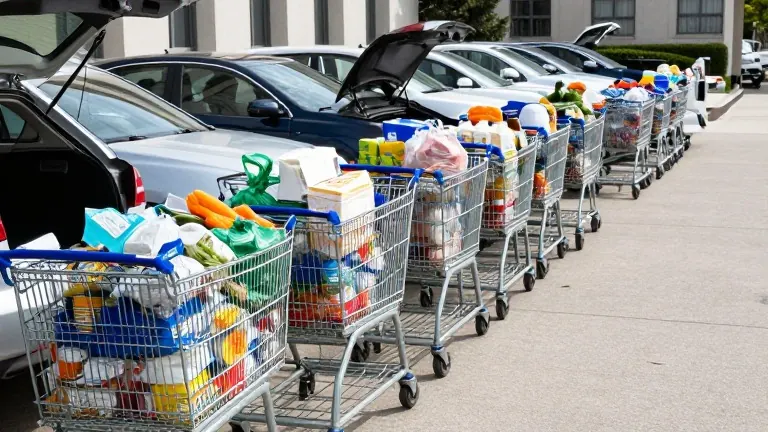
Rosa Rodarte spent a recent Saturday morning pushing carts of groceries into the trunks of waiting cars. It was her day off, but she returned to the social service office where she works to help residents who lost access to federal food aid. Rodarte, who normally assists applicants with paperwork, found herself delivering food directly to those in need as enrollment in the Supplemental Nutrition Assistance Program dropped sharply.
The decline stems from the One Big Beautiful Bill, a tax and spending package signed into law in July 2025. The legislation reduced SNAP funding, tightened eligibility standards, and excluded most asylum seekers and refugees from receiving benefits. Nationwide, approximately five million people have lost federal food assistance since the bill passed. San Diego County experienced a specific drop of 36,000 participants between July 2025 and September 2026.
In response to the gap in federal support, the San Diego County Board of Supervisors secured $15.8 million to offset the loss of funding. The board also approved the hiring of 122 new social service workers. These measures aimed to manage the increased administrative burden and maintain service levels for remaining applicants.
Monica Montgomery Steppe, the county’s vice chair, initiated the direct food distribution program after reviewing projections of local benefit losses. She drafted a plan for food events and presented it to staff, stating that the county had to act. The initiative launched in August 2026. From August through September, county staff and partners distributed nearly 70,000 pounds of food to more than 5,200 people. The effort was a joint operation with Feeding San Diego and the San Diego Food Bank.
Administrative challenges have compounded the financial strain on local agencies. San Diego processed over 830,000 additional documents between January and October of 2026 compared to the same period in the previous year. That figure covers mailed documents only, which represent about one-third of total incoming paperwork. Nina Olivas, who oversees the county’s Access Customer Service Call Center, noted that the increased documentation requirements place a heavy load on staff who must verify new work requirements for groups including homeless individuals, veterans, and adults aged 55 to 64.
Other states have implemented various stopgap measures. Illinois provided a one-time $400 benefit to individuals removed from SNAP. Phoenix, Arizona, issued a $600 payment toward utility bills for those who lost federal food aid. Maine established a state-funded program for specific noncitizen residents. In contrast, Texas saw its SNAP application backlog grow from 3,700 pending cases in January to 175,000 in September. Louisiana reported a loss of 154,000 enrollees between July 2025 and September 2026, with most removals attributed to procedural errors such as missed interviews or missing forms.
At the San Diego distribution sites, lines form approximately 90 minutes before official start times. Attendees include young families, seniors, and veterans. Social service workers manage the lines while also addressing individual questions regarding federal changes and case issues. Ambar Santiago attended a recent event after a delay in her benefits due to paperwork errors. She received vegetables, canned goods, and diapers. A worker reviewed her case file and offered to resolve the issue immediately.
Santiago used the ingredients from her distribution to prepare carne guisada, a Puerto Rican beef stew. She noted that the level of direct assistance she received in San Diego differed from what she experienced in other regions. The county’s food distribution events continue to operate as a temporary measure while the federal program adjusts to the new legislative framework.
More News · Columbus news · Report a business · Got a Story?