Wesley College Drops Seven-Day Boarding After Demand Falls
Private school fees in Ireland have risen by 25 percent over five years, forcing institutions to adapt to changing family preferences.
By Emily Brooks ·
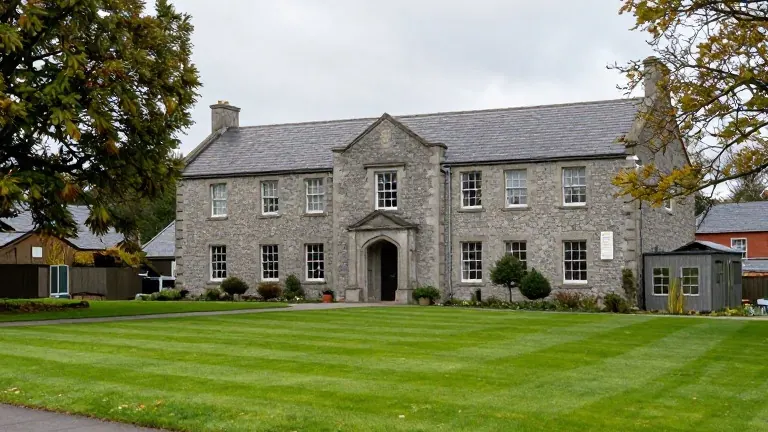
Wesley College in south Dublin announced this month that it will no longer offer seven-day boarding for students. The private school told parents in a written statement that the boarding market in Ireland has changed considerably. The administration noted that demand for the traditional seven-day model has declined sharply while interest in five-day boarding has grown. Families now prefer a schedule that keeps students in residence during the school week but allows them to return home for weekends.
This decision follows a similar move by Glenstal Abbey School in County Limerick. The prestigious institution announced it is closing its doors entirely just one week before Wesley College issued its statement. Glenstal Abbey cited challenges faced by boarding schools across Ireland and elsewhere, indicating that the pressure is not isolated to a single location. These closures occur as private school fees in Ireland have risen by nearly 25 percent over the past five years. Recent data analysis shows that this financial tightening has directly increased the cost burden on parents.
Mark Boobbyer, the warden of St Columba’s College in Dublin, said his institution’s model remains strong. He reported that enrollment numbers for Irish boarders for next September are at their highest level in recent years. St Columba’s is a coeducational Church of Ireland school located in Whitechurch, Dublin 16. It offers only seven-day boarding and charges €31,154 for boarders. Day pupils pay €11,481. With 350 total pupils, 245 are boarders, representing 70 percent of the student population.
Boobbyer argued that families choose schools where boarding is the primary focus rather than a peripheral option. He stated that parents prefer institutions dedicated to the boarding experience. He believes that if a family intends to send a child away during the week, they should attend a school specifically designed for that purpose rather than a day school that also offers boarding.
Changes in United Kingdom tax law have also influenced enrollment in Irish schools. In January 2025, the UK government removed the VAT exemption for private schools to fund more state school teachers. This move subjected private school fees to 20 percent VAT, causing costs for parents in the UK to rise by 22 percent in one year. UK private school enrollment dropped by 11,000 students during that same period. Barbara Ennis, the principal of Alexandra College in Milltown, Dublin, said this shift has benefited her school. She reported an increase in applications from UK students, particularly those with Irish heritage.
Alexandra College, a Church of Ireland school for girls, offers both five and seven-day boarding. Boarding fees range from €22,104 to €23,441, while day fees are €9,302 for the current academic year. Ennis said the school has a full list of 200 boarders for the coming year. This number has grown significantly since she took over in 2010, when the school had only 64 boarders. She attributed the growth to a sustained marketing campaign and a recent building program that included new student accommodation. New staff housing is planned to open soon.
Both St Columba’s and Alexandra College benefit from their locations in wealthy suburbs of Dublin. Boobbyer noted that parents at his school are typically dual-income professionals who work late. He described the boarding arrangement as a one-stop shop that allows these parents to enjoy weekends with their children after dropping them off at school. Most Irish boarders return home for part of the weekend.
International students make up a large portion of the boarding population at Alexandra College. Ennis stated that 50 percent of the boarders come from outside Ireland. The school actively promotes itself at international education fairs. Ennis said the school attended a fair in Germany last week. Plans are in place for trips to Japan at the end of November, New York in April, and Miami in April.
Ennis identified global economic uncertainties as a potential future challenge. She cited the impact of the US administration and ongoing conflicts on parents' financial stability. Boobbyer agreed, noting that the economic crash of 2008 made it difficult for families to afford fees. Both principals monitor the economy closely, aware that a downturn could affect the ability of families to pay for high-cost private education.