436,000 Provisional Ballots Disqualified in 2024, Record Shows
Election officials and advocates warn that new legal challenges in Texas, Alaska, and Ohio could remove similar numbers of votes from the upcoming midterm count.
By Ethan Mitchell ·
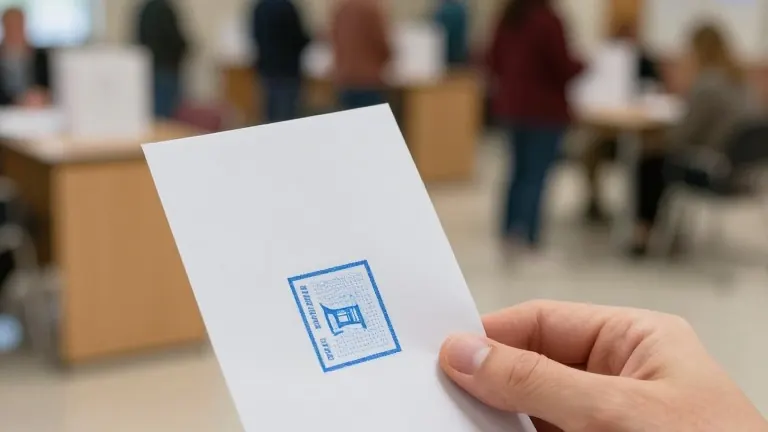
Records from the Elections Assistance Commission show that more than 436,000 provisional ballots were disqualified during the 2024 election cycle. These ballots are typically issued to voters who face challenges at the polling place, such as issues with identification or signature verification. The data provides a baseline for the potential impact of legal strategies being prepared for the midterm elections scheduled for next Tuesday.
The first major step in these efforts involves voter registration challenges. In 2024, the Texas-based group True the Vote challenged over three-quarters of a million voter registrations. For the current cycle, the organization has kept its target numbers secret. In Georgia, GOP operative Pamela Reardon personally challenged 32,379 voters in Cobb County using lists generated by True the Vote. These challenges rely on a standard of "reason to believe" a voter is ineligible, rather than definitive proof of illegal status.
Texas Attorney General Ken Paxton, who is running for the US Senate, is positioned to oversee the disqualification of ballots from these challenged voters. Election rules in the state allow for the rejection of mail-in ballots based on minor procedural errors. A recent court victory established that if a voter licks the outside of the envelope but not the inside, the ballot can be tossed. Other common grounds for rejection include signature mismatches and the use of an incorrect pen color.
Provisional ballots remain a central point of contention because they are disproportionately issued to voters of color. In 2020, the number of rejected provisional ballots fell by half, which contributed to the victory of Joe Biden and Georgia Senate candidates Jon Ossoff and Raphael Warnock. That shift followed a massive post-election phone-banking operation by groups including the SaveYourVote.org campaign and Black Voters Matter Fund, which helped voters "cure" their ballots by providing new identification to county registrars.
In Alaska, the Trump administration has already filed a legal challenge before the election is held. Attorney General Todd Blanche has asked a judge to reject a potential Democratic victory due to a technicality in the ranked-choice voting system. The suit argues that two candidates named Dan Sullivan appear on the ballot. The administration maintains that the election is valid if the Republican wins but invalid if he loses.
In Ohio, former Secretary of State John Husted, now appointed to a vacant Senate seat, previously oversaw the removal of over 800,000 voters from the rolls. The Supreme Court upheld that purge, which critics argued had racial biases. Democratic candidate Sherrod Brown currently leads in the polls, but faces a voter roster that has been significantly reduced. If he wins, the Justice Department is expected to seek to block the certification of votes in urban counties such as Cleveland and Dayton.
The Justice Department has also distributed lists of supposed noncitizen voters to remove from rolls in states like Texas and Michigan. These lists are derived from Homeland Security deportation records and include names common among ICE deportees, such as Jose Garcia. The department has not charged any of these individuals with the felony crime of voting while an alien, a fact that election observers note is consistent with the lists being based on name similarities rather than confirmed legal status.
If the administration cannot disqualify enough individual votes to overturn likely Democratic victories, the plan involves stopping the certification of the vote in specific counties. This would exclude all votes from those areas, including Travis and Harris counties in Texas, Cleveland and Dayton in Ohio, and Arctic-zone counties in Alaska. The Justice Department is expected to argue that the voter registries in these minority-heavy counties contain a high number of vigilante-challenged or noncitizen voters.
The administration is also sending armed agents into polling places in Mexican-American precincts in Texas to monitor the process. These efforts are coordinated with the Southwest Voter Registration Education Project and their Latino Mobilization campaign, which are documenting the presence of federal agents. The strategy relies on a combination of registration purges, ballot rejection, and certification blocks to shift the control of the US Senate.
Source: Columbus Free Press · original report published
More Politics · Columbus news · Report a business · Got a Story?