Coshocton County Residents Report Surge in Black Bear Activity
Local sightings have jumped from one confirmed report in 2024 to 11 in 2025, prompting state wildlife officials to monitor the expanding population.
By Emily Brooks ·
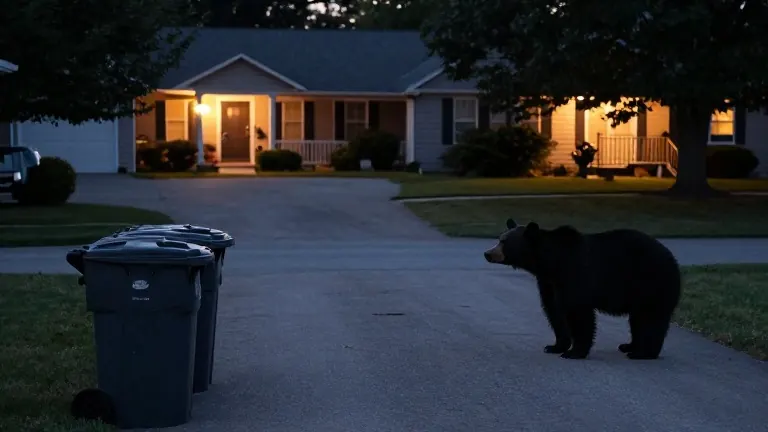
Brandan Smith encountered a black bear in his Coshocton County driveway in mid July. The animal was rummaging through trash bins and eating freezer-burned ice cream. Smith called the local police, and a cruiser scared the bear away with a spotlight. He was not the only resident to see one; a day or two later, Erica Gray spotted a bear with a white chest marking near Fresno. In mid August, West Elementary School principal Erin Peoples received a Ring camera alert showing a bear on her porch. On Oct. 3, Don Dunlap saw a bear 50 yards away while fishing near Wills Creek Dam.
The Ohio Department of Natural Resources (ODNR) has recorded a sharp increase in confirmed black bear sightings. According to the 2026 Ohio Black Bear Monitoring Report, sightings rose to 260 in 2023, 370 in 2024, and 537 in 2025. The 2025 total represented the highest record, with bears observed in 69 of Ohio’s 88 counties. The report noted that the 537 sightings in 2025 marked a significant jump from the 239 annual average recorded over the previous decade.
In Coshocton County specifically, the number of confirmed sightings climbed from one in 2023 and one in 2024 to 11 in 2025. The Reporting Project collected 24 local accounts between May and November 2026 and confirmed 16 of them with photographic or video evidence. ODNR Wildlife Biologist Katie Dennison traced the majority of these recent sightings to a single young male bear with a distinct white, v-shaped marking on its chest.
Black bears disappeared from Ohio in the mid 1800s due to habitat loss and hunting. The state changed the species status from extirpated to endangered in 1995. Mariela Gantchoff, a wildlife ecologist at the University of Dayton, explained that most bears currently in Ohio are transient young males. These males leave their mothers' territories around age two to avoid inbreeding. Gantchoff noted that these wandering bears often have high mortality rates because they lack established home ranges and mates.
Dennison attributed the recent uptick in sightings to two factors. First, the widespread use of cellphones and security cameras allows residents to document encounters that might have gone unreported in the past. Second, bear populations in neighboring West Virginia and Pennsylvania have grown, causing natural expansion into Ohio. Dennison said there is evidence of reproduction in the state, including confirmed sightings of sows with cubs in Ashtabula, Geauga, and Meigs counties.
ODNR advises residents to remain calm and slowly back away if they encounter a black bear. People should not run or climb trees. If a bear approaches, individuals should try to look large by lifting their arms and clapping or shouting. Anyone who sees a bear can report it to the Ohio Division of Wildlife via the online Wildlife Reporting System or by calling 1-800-WILDLIFE.
More News · Columbus news · Report a business · Got a Story?