Drivers May Wait Months for Gas Price Drops
Energy experts say fuel costs will not fall until after the new Congress is seated and shipping routes reopen.
By Nadia Khalil ·
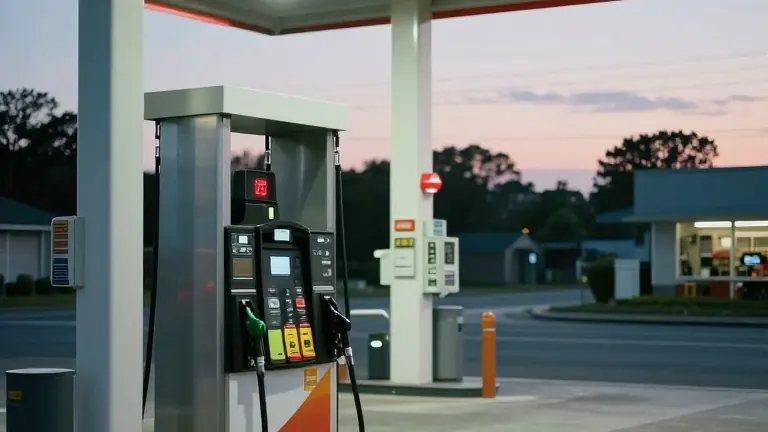
Columbus drivers should not expect immediate relief at the pump following the recent midterm elections. Although Democrats have secured control of Congress, experts note that the new members will not be sworn in until January. Until then, the federal government has limited direct power to lower oil prices, which are driven by global market forces rather than local legislation.
Fuel costs have risen sharply due to the war in Iran. Before the conflict, about one fifth of the world's oil passed through the Strait of Hormuz. The war throttled that waterway, causing a barrel of Brent crude to rise from about $70 in late February to a peak near $110. Prices are now close to $95. A gallon of gas currently averages $4.12, which is about $1 higher than a year ago. Diesel reached a record high of $6.52 in September and remains about $2.50 more expensive than it was last year, according to AAA.
The high fuel prices helped major oil companies post large profits over the past two quarters. However, the costs have increased the price of nearly everything in a nation that relies heavily on trucking. During the election campaign, President Trump attempted to lower diesel costs by loosening rules on dyed diesel and temporarily lifting sanctions to bring more Russian diesel to the market. Neither move significantly lowered prices for consumers.
Senate Minority Leader Chuck Schumer told reporters on Wednesday that Democrats intend to end the war and reduce the cost of living. He stated that relief is on the way. Claudio Galimberti, chief economist of Rystad Energy, wrote in a market note that a unified Democratic Congress can make military escalation more costly. He noted that both chambers can pass resolutions, attach conditions to war spending, and hold back confirmations of key officials.
President Trump retains full discretionary authority over military strikes, blockades, and sanctions. Jorge León, head of geopolitical analysis at Rystad Energy, said the president still holds executive power even with a new Congress. Trump has sent mixed signals about the war. In recent weeks, he warned Gulf Arab countries to prepare for a new military campaign after the midterms. The U.S. Struck Qeshm, an island in the Strait of Hormuz, on Nov. 2. However, on election night, Trump said that he knew voters were unhappy about gas prices. Vice President JD Vance posted on social media the next day that the reason the party lost was the war.
Jaime Brito, executive director of refining and oil markets for Dow Jones Energy, said traders would react quickly to a formal announcement of a deal to end the war. He predicted crude prices could drop $15 or $20 a barrel immediately after such an announcement. However, gasoline and diesel prices will not fall until oil starts moving again. Ships that have taken long alternative routes to avoid the Strait of Hormuz must return to their original paths. This return to normal traffic could lead to congestion.
In the most optimistic scenario, Brito said it could take three months after a ceasefire for gasoline and diesel prices to hit prewar levels. León thinks it would take about six months for crude to return to prewar levels, with another month or two for refined products to follow. Both experts agreed that hiccups could stretch the recovery timeline to a year. Brito noted that expensive gasoline prices could become a new normal if the situation does not resolve quickly.
The war in Ukraine is another factor that could affect prices. If Ukraine continues attacking Russian refineries, diesel prices may not drop as fast as gasoline. Russia's refineries supply much of the world's diesel. U.S. Refineries are currently running above 90% capacity. If they require emergency maintenance when more oil is ready for market, that could delay price drops. Brito also pointed out that the war has raised the cost of moving oil. Freight costs and insurance premiums for ships have increased because transit around the strait is riskier. These higher costs keep Brent crude prices elevated even if the conflict ends.
More Business · Columbus news · Customer Complaints · Report a business · Got a Story?