Meta Revises 2030 Net Zero Targets Amid AI Data Center Surge
Meta is re-evaluating its 2030 net-zero emissions goal as rapid AI infrastructure expansion drives record growth in greenhouse gas output.
By News Media House Staff ·
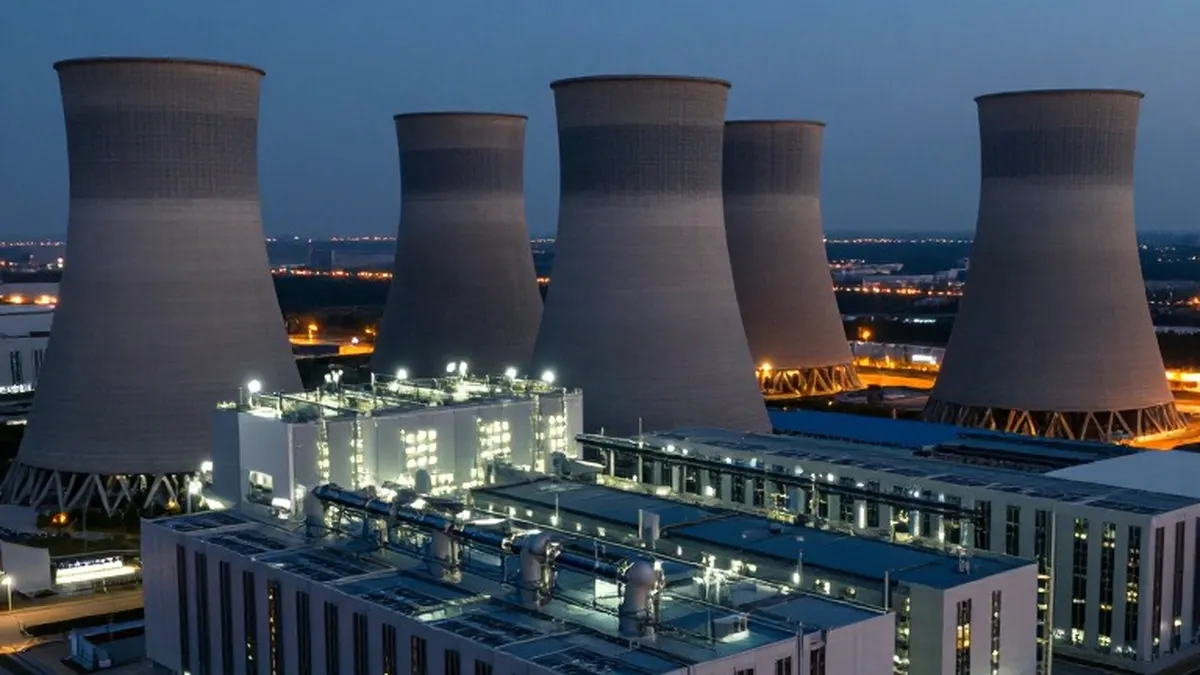
Meta executives are currently rethinking the company's original objective to achieve net-zero emissions by 2030. This strategic shift was revealed in the tech giant's latest sustainability report, which coincides with the announcement of a record percentage increase in greenhouse gas emissions. The surge in output exceeds the growth rates reported by other major technology competitors who are also racing to construct new artificial intelligence data centers.
In the introduction to the 2026 sustainability report, Rachel Peterson, vice president of data centers at Meta, and Blair Swedeen, the global head of net zero and sustainability, noted that the company's long-term ambitions remain intact, but the operating environment has changed. The report, dated November 19, 2026, attributes the need for this reassessment to the fact that demand for AI infrastructure has grown faster than almost anyone projected.
Peterson and Swedeen explained that the company is re-evaluating its timelines, sequencing, and interim milestones. This includes a review of the 2030 timeframe for the net-zero goal and near-term intensity targets. The aim is to ensure that the company's approach reflects current operating realities while maintaining transparent progress year over year.
This public acknowledgment marks a significant development in the tech industry's climate strategy. Amazon, Google, and Microsoft have all continued to stick to their original sustainability goals for the time being. However, all these companies have acknowledged the challenges of balancing their initial environmental commitments against the rapid buildout of hyperscale data centers required for AI workloads.
Despite significant investments in renewable energy projects, Meta and its rivals often continue to advance AI data centers that rely on burning natural gas to generate electricity. This dependency on fossil fuels for power has become a central factor in the rising emissions figures reported by the industry leaders.
The latest report details a sharp increase in Meta's total emissions. The company's carbon footprint surged from 15.6 million metric tonnes of carbon dioxide equivalent in 2024 to more than 21.7 million metric tonnes in 2025. This substantial jump highlights the environmental impact of scaling up computational infrastructure for artificial intelligence.
To provide context for this increase, the report notes that Meta's annual carbon footprint is now roughly comparable to the total emissions of the state of Idaho. The figure also surpasses the total emissions of states such as Hawaii, Maine, South Dakota, and New Hampshire. This comparison illustrates the scale of the company's environmental impact on a national level.
Meta attributed much of this emissions increase to capital goods. These items include essential hardware such as data center servers. The procurement and operation of these physical assets represent a significant portion of the company's overall carbon intensity as it scales its infrastructure to meet growing AI demands.
The re-evaluation process signals a broader industry adjustment as technology companies grapple with the energy demands of AI. While the specific new targets or revised timelines have not yet been fully detailed in this initial report, the shift underscores the tension between technological expansion and environmental sustainability goals in the current market landscape.
Originally published by News Media House
More News · National news · Report a business · Got a Story?