Schwarz Foundation Rebuilds Heilbronn Campus
A German billionaire's private investment has transformed a Swabian town into a major hub for education and research.
By Nadia Khalil ·
Heilbronn, Germany, a city of 133,000 people located near Stuttgart, is undergoing a major physical and economic transformation. The change is driven by the Dieter Schwarz Foundation, which is building an education and research campus on the banks of the Neckar river. The project aims to create a center for academic and business innovation in the region.
Dieter Schwarz, 87, is the founder of Lidl, the discount retailer established in 1973. Forbes estimates his personal fortune at 58 billion euros. His private group, which includes shipping and technology firms, reported a turnover of 185.6 billion euros in 2025. Schwarz has designated his foundation as the sole heir to his business. He does not give interviews and few photographs of him are publicly available.
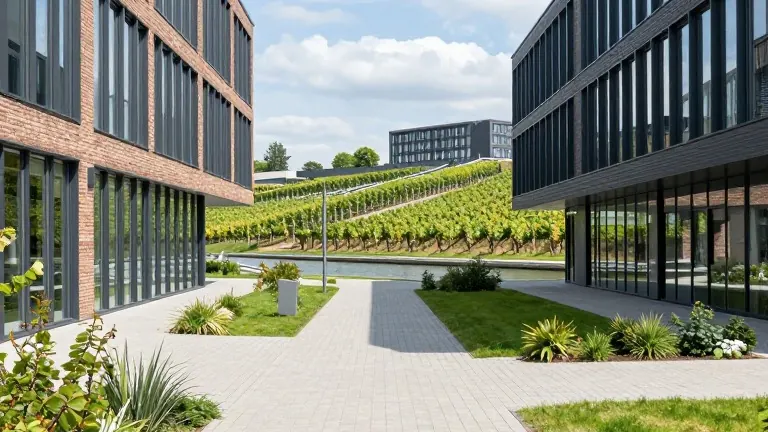
The foundation began acquiring land in the center of Heilbronn a decade ago. It constructed modern buildings with high-end materials, including Danish brick facades and oak parquet floors. The foundation funds 47 full professorships for 30 years across fields such as architecture, engineering, computer science, and management. The Technical University of Munich and ETH Zurich serve as anchor tenants for the campus.
Prof. Reinhold Geilsdörfer, chief executive of the foundation, oversees the project. He stated that the investment reflects Schwarz’s view on spending. “It’s fine for things to cost a bit more once they are sustainable and long-term,” Geilsdörfer said. “One just shouldn’t spend money on nonsense.” The foundation also funds a school, a science museum, and a kindergarten teacher training college in the city.
The campus includes IPAI, an artificial intelligence facility described as a global home for human AI. The federal government has also established two primary research institutes in Heilbronn: Max Planck and Fraunhofer. These institutions operate without the constraints of public funding rules and tender processes. The campus design includes a seven-storey library, cafes, restaurants, a telemedicine cabin, and an automated 24-hour convenience store.
A Heilbronn branch of the DHBW, a state-run vocational university, is also part of the initiative. Carsten Kortum, head of the retail and trade department, noted that even Lidl’s rival Aldi sends trainees to the program. Kortum, a former senior Lidl executive, said the department follows a similar independence philosophy as the retail company. “We are losing our independence in Germany, in particular with our dependence on US tech firms, but we are lucky to have a private benefactor willing to push us forward,” Kortum said.
Students from non-EU countries pay semester fees of 100 euros at the campus. Ahmed Dwael, a 24-year-old from Cairo, is studying management in an English-language program. He said the cost would have been 16,000 euros elsewhere. “There is such a good atmosphere and everyone has made such an effort to make me feel at home,” Dwael said.
David Rischow, a 24-year-old software engineering student, highlighted the collaboration between institutions on the campus. “What makes it special is the high concentration of different institutions. They foster collaboration and joint projects and bring together students from diverse backgrounds,” Rischow said. The campus also includes Campus Founders, a start-up hub that helps students launch ventures and partner with local family-owned enterprises.
Florian Kratz, director of marketing communications at Campus Founders, described the hub as a non-profit that operates with an entrepreneurial mindset. “We are not building future competition here, we don’t want to disrupt but to transform,” Kratz said. The foundation aims to have 20,000 students based in Heilbronn by 2030. Geilsdörfer expressed hope that other wealthy individuals in Germany would replicate this model nationwide.
Geilsdörfer noted that Schwarz focuses on long-term value over personal luxury. “He does sensible things with his money. Others buy yachts and properties around the whole world but he doesn’t want to,” Geilsdörfer said. When asked if Lidl shoppers contributed to the project’s success, Geilsdörfer replied, “But we’ve had to sell a lot of yoghurt for all this.”