SpaceX catches Starship in mid-air after failed booster recovery
The upper stage returned to its launch pad in Texas, marking a key milestone for NASA's lunar program despite the first stage exploding in the Gulf of Mexico.
By James Anderson ·
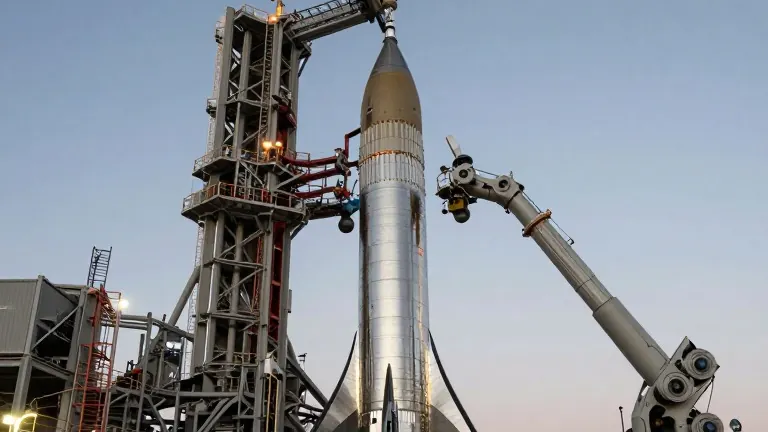
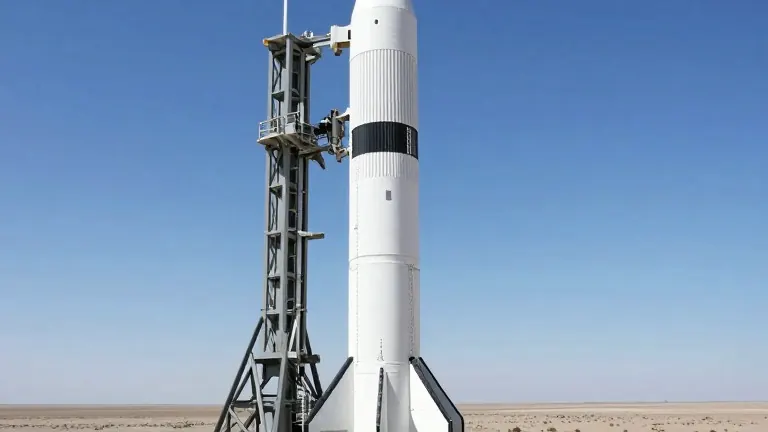
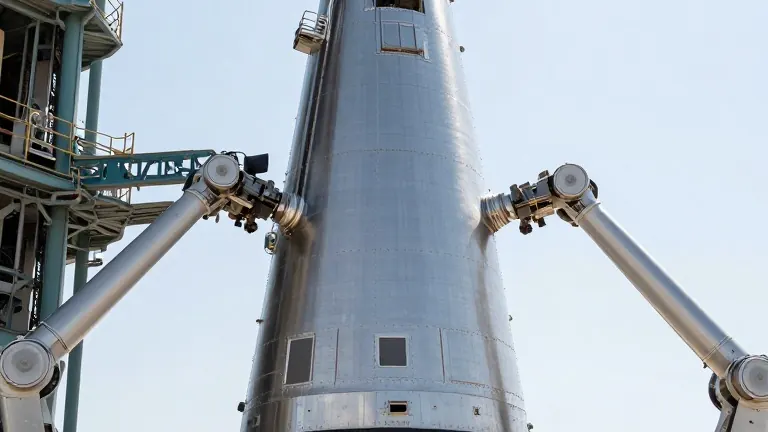
SpaceX successfully caught its Starship rocket in mid-air on Saturday, marking the first time the company has recovered a spacecraft returning from orbit. The vehicle landed upright on its launch pad near the US-Mexico border in Texas, where it had taken off late Friday afternoon. This capture is a critical step toward the reusability required for future Moon and Mars missions.
The achievement did not go without complications. The first-stage booster, which separated cleanly before the spacecraft reached orbit, exploded shortly after Friday's launch. Wreckage fell into the Gulf of Mexico and was surrounded by buoys to mark the area. SpaceX engineer Kate Tice explained that the booster's engines stopped firing too early on the descent. The guidance system detected the error in position and triggered an automatic self-destruction sequence. Engineers are currently investigating the cause of the engine failure.
While the booster recovery missed the target, the upper-stage spacecraft performed as intended. It reached an altitude of 265 kilometers above Earth and completed 14 laps around the planet. This marks a substantial increase over the one to two laps achieved in previous missions. During its flight, the vehicle released 26 Starlink satellites and streamed live video of Earth back to the ground. SpaceX reported that the heat shield and other critical systems on the spacecraft functioned properly.
The company called the event a validation of the full reusability of the Starship system. Although this was the second orbital flight for the vehicle, it was the 15th full-scale test since 2023. The successful catch demonstrates that the company can retrieve the expensive upper stage for future use. SpaceX has already successfully caught boosters on three previous occasions, proving the mechanical arm technique works for the lower section of the rocket.
NASA welcomed the news, as the agency relies on Starship to land astronauts on the Moon later this decade. Administrator Jared Isaacman posted on social media that the event was almost magic and brought the agency closer to its lunar goals. The space agency is paying billions of dollars for this capability. The next step involves launching Starships from Florida's Kennedy Space Center within the next few months. These launches will support NASA's Artemis program, which aims to send four astronauts to dock with Starship and Blue Origin's Blue Moon lander in 2028.