SpaceX catches Starship in midair after historic 14-lap orbit
The spacecraft completed 14 orbits and deployed 26 satellites before being caught by mechanical arms in Florida, though its booster exploded over the Gulf of Mexico.
By Ethan Mitchell ·
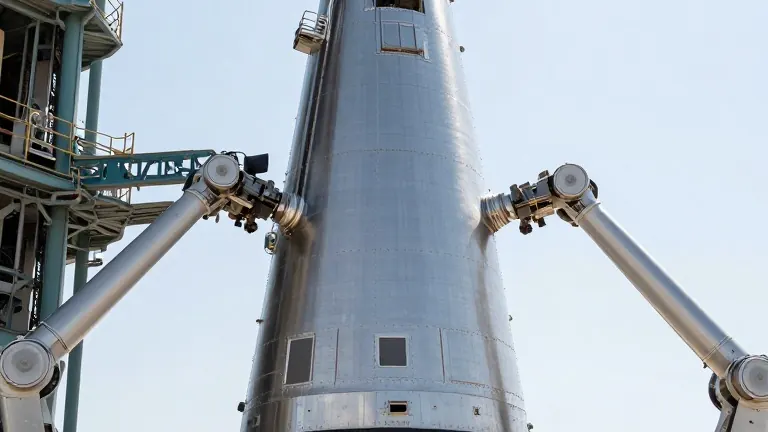
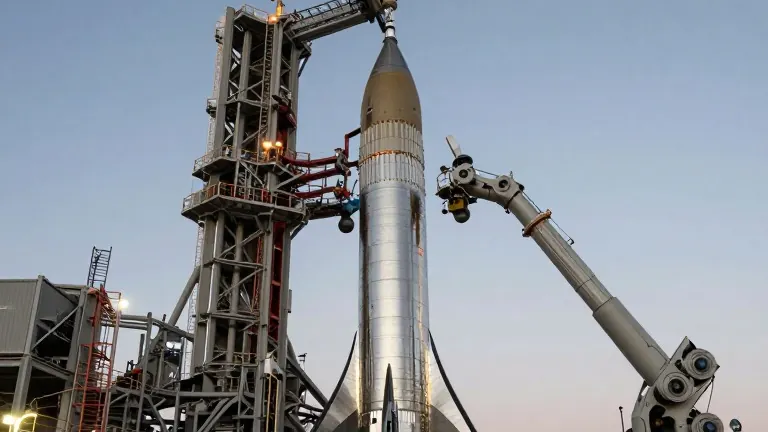
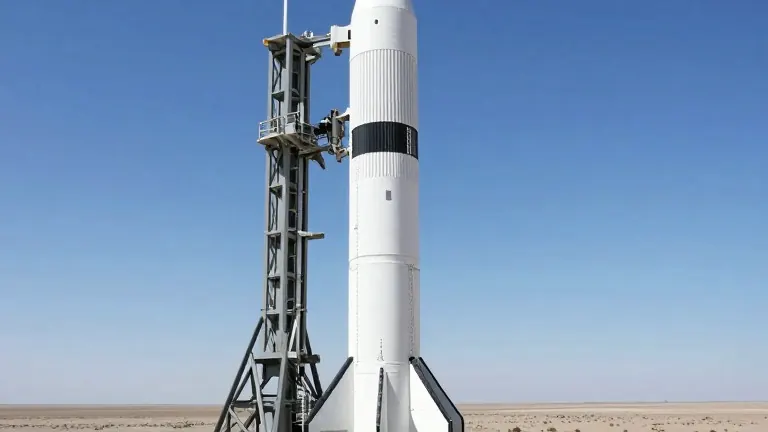
SpaceX successfully caught its Starship spacecraft in midair on Saturday, marking the first time the company has captured a vehicle returning from space. The stainless steel spacecraft was grabbed by giant mechanical arms at the launch pad in Florida, where its 22-hour journey began the previous day.
The upper stage of the rocket spent 14 laps orbiting Earth at an altitude of 165 miles. During this time, it released 26 Starlink satellites and streamed live video of itself and the planet below. This marked SpaceX's second orbital trip and its 15th full-scale flight since 2023, vastly exceeding the one to two laps of previous missions.
The booster, however, did not return safely. Engines stopped firing too soon during the descent, causing the guidance system to initiate a self-destruction sequence. The rocket exploded shortly after lifting off from Texas on Friday, leaving wreckage in the Gulf of Mexico that is now cordoned off by buoys.
Kate Tice of SpaceX said engineers are investigating why the booster failed. Despite this setback, the company has previously caught the booster three times, validating the recovery technique. The successful capture of the upper stage demonstrates the full reusability of Starship, a key goal for future moon and Mars travel.
NASA is paying billions for Starship to land Artemis astronauts on the moon later this decade. The agency aims to build a permanent lunar base using these vehicles. Elon Musk has stated his ambition to launch a fleet of Starships to build a city on Mars.
SpaceX plans to begin launching Starships from Florida's Kennedy Space Center within the next few months. This location will serve as the starting point for NASA's next Artemis mission, which will remain in Earth orbit for lunar lander practice. Four astronauts on Artemis III will attempt to dock their capsule with both Starship and Blue Origin's Blue Moon.
NASA is targeting as soon as 2028 for Artemis IV, which would be humanity's first moon landing since the Apollo era. The 407-foot rocket is the world's largest and most powerful, designed to handle the heavy lift required for these deep space missions.
More Tech · Columbus news · Report a business · Got a Story?