Supreme Court set to rule on Trump border asylum ban
Border apprehensions fell 95% under the new policy, but advocates argue the administration stripped due process rights from asylum seekers.
By James Anderson ·
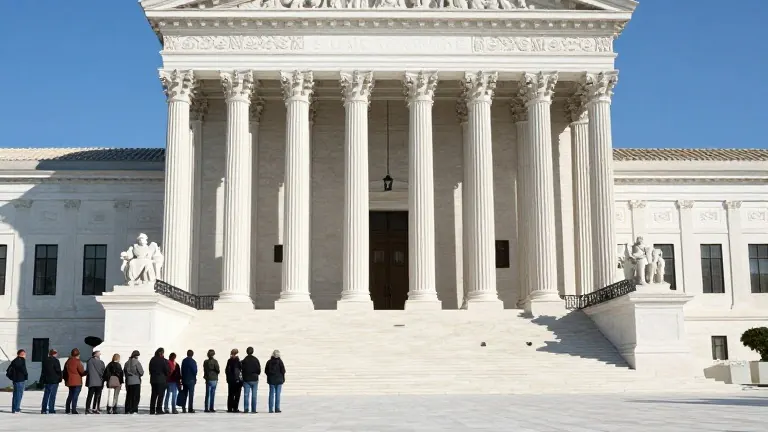
The U.S. Supreme Court will soon decide whether President Trump can suspend asylum protections at the southern border without Congressional approval. The legal challenge centers on a presidential proclamation issued hours after the president returned to office in early 2025. Critics argue the move effectively closed the primary legal pathway for individuals fleeing persecution.
U.S. Customs and Border Protection data shows the policy has drastically reduced traffic at the border. Southwest border apprehensions dropped to fewer than 99,000 in fiscal year 2026. That represents a 95% decline compared to the more than 1.8 million recorded annually under the previous administration.
Simon Hankinson, a senior research fellow at the Heritage Foundation, called the difference in monthly crossings staggering. He argued that most arriving migrants do not qualify for asylum because they have already passed through Mexico, a safe third country. "They're here because they want to get a job," Hankinson told NPR.
Two lower federal courts have already rejected the administration's legal argument for the ban. The policy remains in place while the case is tied up in ongoing litigation. The Supreme Court will also review the administration's strategy of deporting immigrants to third countries. Those nations have agreed to process the claims despite human rights concerns.
National asylum denial rates reached 94% in June, according to TRAC, a research project at Syracuse University. That figure is up from approximately 50% in 2024. Lee Gelernt, lead counsel for the American Civil Liberties Union, stated that the president lacks the unilateral right to override protections afforded by Congress.
Madhavi Narayanan, a Los Angeles-based immigration attorney, is currently representing an Ethiopian man referred to as ZG. ZG arrived in the United States in February 2025 after enduring torture in his home country. He belongs to an Indigenous group involved in an ongoing armed conflict.
Narayanan filed an asylum petition upon ZG's detention at the border. She provided documents and letters supporting his claims of torture. Despite the evidence, the immigration judge issued a deportation order to Uganda this month. Uganda does not recognize the military violence in Ethiopia as a war.
The administration has canceled thousands of pending asylum cases by arguing they are incomplete or that applicants can claim protection elsewhere. The Executive Office for Immigration Review has issued nearly 60 policy memorandums during the second Trump administration. This is a sharp increase from the 30 issued during the previous four-year term.
More than half of current immigration judges are now Trump appointees. Approximately 40% of judges were fired or resigned during the first year of the term. Geoffrey Heeren, a professor at the University of Idaho, noted that only about 11 of the new judges have prior immigrant-defense experience.
Jennifer Peyton, a former assistant chief immigration judge in Chicago, was fired via email in July 2025 after serving on the bench for more than nine years. She said many new judges rely on procedural shortcuts to strip noncitizens of due process. "Everything is different now," Peyton said.
More Politics · Columbus news · Report a business · Got a Story?