Trump adopts wait-and-see strategy as Iran war enters ninth month
With negotiations stalled and regional economies contracting, the U.S. president relies on frozen assets and naval blockades to pressure Tehran.
By Nadia Khalil ·
President Donald Trump is maintaining the current state of conflict with Iran rather than pursuing an immediate military solution, according to diplomatic sources and recent public statements. Nine months into the war, the U.S. leader faces limited options as he weighs the cost of further escalation against the desire to end hostilities. On Thursday, Trump posted on Truth Social that the United States does not need a formal deal with Tehran because it controls billions of dollars in Iranian funds frozen in overseas accounts. He stated that the era of seeking agreements has passed.
Negotiations remain deadlocked, with Qatar serving as the primary mediator. Trump met with the Qatari prime minister at the White House this week and reported that Gulf Arab allies prefer the status quo of continued economic pressure. He described the U.S. military posture as locked and loaded but said a new attack seemed unlikely at this moment. This stance marks a shift from his earlier threats of quick, intense strikes, which preceded two election setbacks that altered his political landscape.
The shifting political context includes challenges both abroad and at home. Israeli Prime Minister Benjamin Netanyahu, a key wartime ally, is on the verge of losing power following recent elections in Israel. Domestically, the Republican Party lost its majority in Congress during the midterm elections. Vice President JD Vance attributed these losses to the unpopularity of the Iran war and the nature of U.S. relations with Israel. With less room to maneuver, Trump appears committed to keeping conditions stable for the time being.
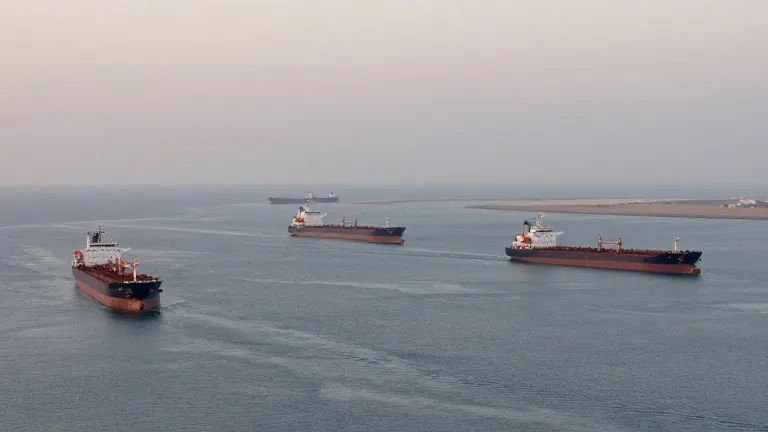
The economic strain of the status quo is evident across the Gulf region. Iran continues to control the Strait of Hormuz, posting videos of ship attacks on official social media channels for violations of new navigation rules. While the U.S. assists oil tankers through a route near the Oman coast, this solution does not restore pre-war production levels for liquified natural gas, fertilizer, or aluminum. The International Monetary Fund reported that Gulf Arab states are in economic recession despite higher oil prices. Kuwait, Qatar, and Iraq are contracting approximately 16 percent this year, while Bahrain’s economy has fallen 11 percent.
Military tensions persist despite the diplomatic pause. The U.S. is deploying a third aircraft carrier with thousands of troops to the region. Iran revealed a new underground missile production site this week. Tit-for-tat strikes continue, with Iranian media reporting a U.S. strike on an island in the Strait of Hormuz on Friday. Iran’s Revolutionary Guard responded by targeting a U.S. early warning radar in Bahrain. Secretary of State Marco Rubio told reporters that sanctions are currently doing the work of military action, noting that Iran must eventually pay its fighters and security forces.
The conflict has also intensified fighting in Yemen, where the Houthis have resumed all-out war with Saudi Arabia. The Houthis, supported by Iran, reported that Saudi airstrikes killed nearly 60 people in a village near Sana’a over the weekend. Saudi Arabia faces daily missile and drone attacks, including hits on its East-West pipeline and Aramco’s headquarters in Riyadh. Pakistan, Turkey, and Egypt are providing defensive support to Saudi Arabia, while the U.S. supplies intelligence. The United Nations estimates that 330,000 Yemenis have been displaced by the renewed fighting.
Diplomatic efforts continue without major progress. Iran says it is prepared for a short-term pause on ship attacks but insists on seven specific demands before direct talks on its nuclear program begin. These demands include lifting sanctions, ending the naval blockade, and unfreezing Iranian dollars. Rubio called the conditions absurd. Mohsen Rezaei, head of Iran’s Supreme National Security Council, told state broadcaster that Iran will not remove even a shred of enriched nuclear material from the country.
A new U.S. military operation dubbed Iron Gate aims to prevent Iran from using land routes to transport advanced weapons across its borders and the Caspian Sea. The operation involves multiple U.S. government agencies. As mediators work to bridge the divide, both sides remain firm in their positions, leaving the region in a state of prolonged uncertainty.
More News · Columbus news · Report a business · Got a Story?