20 Cooks Teach Barcelona Students to Flip the Pan
A nonprofit program connects older residents with young visitors to preserve traditional recipes and combat isolation.
By Emily Brooks ·
The kitchen at the civic center fell silent as the countdown reached one.
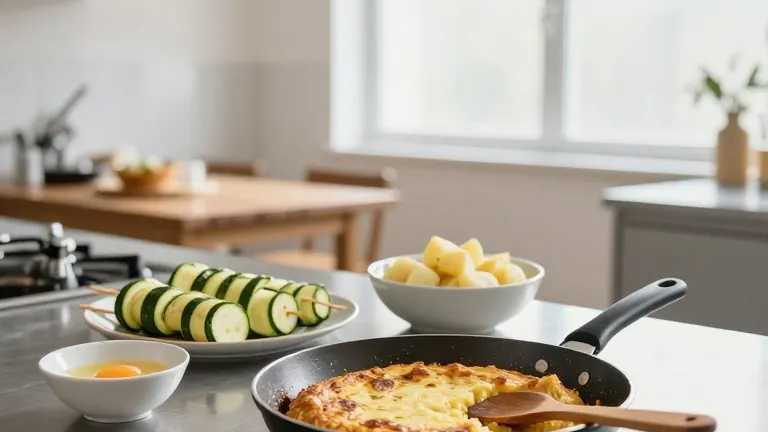
Mason Kauffman, a junior at Plymouth State University in New Hampshire, gripped the handle of a sauté pan and flipped the contents onto a waiting plate. The group of American exchange students erupted in cheers as the Spanish tortilla slid back into the pan to finish cooking. Kauffman, still smiling, admitted the moment made him nervous, but the success earned him a hug and a demanded kiss on the cheek from his instructor.
Sonia Castel, 63, directed the session with a drumroll on the counter. She is one of 21 older adults who teach cooking classes through Grandmas Cooking Barcelona. The organization was founded in 2017 by Veronica Baena after she noticed grandparents at her son’s school had little else to do with their time. Baena invited a few of them to her home to cook, and the small experiment grew into a program that now operates out of civic centers and social service organizations across the city.
The curriculum focuses on traditional Catalan and Spanish dishes that have become rare in local restaurants. Baena describes the initiative as a way to empower older residents and integrate them into the international community. She stated that the goal is to recover their personalities and provide a sense of purpose beyond the gastronomic experience.
Nuria Isanda, 75, joined the group early on because of the aroma coming from her kitchen window. She noted that her recipes are rarely seen in the city’s tourist-focused dining scene. Isanda observed that family members who visit on weekends often fail to appreciate the food, sometimes without even offering thanks. She views the workshops as a platform that allows grandmas to feel valued and useful.
During the recent class, Isanda demonstrated how to make zucchini ribbons and thread them onto skewers with a vinaigrette. Students also prepared crackers with goat cheese and blueberry jam and decorated ensaladilla rusa, a potato salad containing hard-boiled egg, chopped pickles, and tuna. The instructors emphasized sustainability by teaching students to save vegetable peels and ends in freezer bags for future stock.
Castel joined the program last year after retiring from hospital admissions work. She said interacting with foreigners made her feel more connected and alive. Castel described the sharing of food as a social act that leaves participants happy, noting that the organization provides a sense of worth that cannot be priced.
The group consists of 20 women and one man who share cooking tips and life lessons with visitors. They emphasize techniques such as cracking eggs on a counter rather than a bowl rim to avoid shells. The program continues to offer these sessions to tourists and schools, aiming to keep traditional methods alive in a changing city.