Anthropic Engineer Claims AI Help Prove Riemann Hypothesis
Levent Alpöge says he used the company's Claude model to generate a 17-million-line code proof for the century-old math problem.
By James Anderson ·
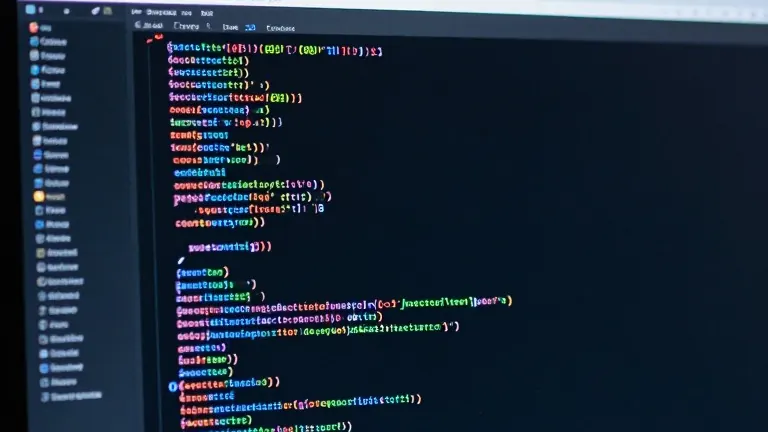
Levent Alpöge, a technical staff member at Anthropic, stated on Friday that he believes he has solved the Riemann Hypothesis with the assistance of the company's artificial intelligence tool, Claude. Alpöge published a four-page explanation on his personal website to detail the work, which he said was completed late Sunday night. He contacted Anthropic CEO Dario Amodei via message to ask about his ability to make the public announcement just as the San Francisco-based company prepared for a major market event. The release came one day after Anthropic completed its initial public offering, which became the most valuable in history.
The Riemann Hypothesis, formulated in 1859, concerns the distribution of prime numbers as they extend toward infinity. For over 150 years, mathematicians have attempted to prove or disprove the statement without success. Alpöge described his collaboration with the AI in a lighthearted tone, noting that Claude far outpaced him near the end of the project. He wrote that the model flew, danced, and sparkled near the finish line, indicating a rapid acceleration in the generation of the proof.
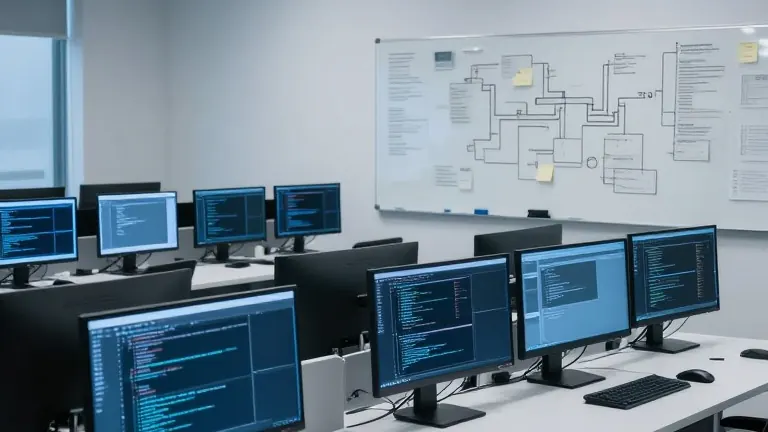
Alpöge released the proof as 17 million lines of Lean code, a specialized programming language designed for verifying mathematical theorems. Traditionally, such findings are presented in formal academic papers that other experts must read and verify line by line. Alex Kontorovich, a distinguished professor and department chair of mathematics at Rutgers University, explained that while a paper serves as code for a proof, a computer-generated proof requires a different method of validation. He noted that the AI followed the code and confirmed the proof is true, though he personally has not yet fully understood the logic behind it.
Kontorovich described the computer as extraordinarily picky, suggesting that if the code satisfies the machine, it has a high probability of satisfying human scrutiny as well. He acknowledged that he must still do the work to comprehend the solution fully. Martin Bridson, president of the Clay Mathematics Institute, said the announcement holds the promise of transforming how people view the possibilities in mathematical research. He noted, however, that the journey from this initial announcement to a place of real understanding will be long and difficult.
The Clay Mathematics Institute selected the Riemann Hypothesis in 2000 as one of seven Millennium Prize Problems, offering a reward of $1 million for a correct solution. As of hours after the announcement, the hypothesis remained listed as unsolved on the institute's website. Alpöge stated that he is presenting a complete argument before he has mastered the massive neighborhood of mathematics surrounding the proof. He reported that more than 250,000 pages of material came out of his work with the AI.
This claim follows a similar assertion in September, when OpenAI said its technology was key to a breakthrough regarding the Navier-Stokes equations, which govern fluid flow. Kontorovich commented on the sequence of events, describing an out-of-body experience where he found himself saying the Riemann Hypothesis has been solved. He expressed disbelief at the words coming out of his mouth, reflecting the shock of seeing two major mathematical hurdles addressed in such a short timeframe.
Anthropic raised a record-breaking $8 billion at a valuation of $1.5 trillion during its Wall Street debut this week. CEO Dario Amodei has projected an optimistic vision for the future of AI, expecting it to lead to major advancements in math and science research. He has also warned about the potential risks the technology poses. Anthropic did not respond to an email request for comment regarding Alpöge's specific claim.
Alpöge's work highlights the growing role of AI in tackling complex mathematical problems that have resisted human effort for generations. The 17 million lines of code now exist in a format that other mathematicians can examine, though the process of verification will take considerable time. The announcement has shifted the focus of the mathematical community from traditional proof methods to code-based verification, marking a distinct change in how such discoveries are handled.
More Tech · Columbus news · Report a business · Got a Story?