Back-to-back atmospheric rivers target Oregon and Washington this weekend
Meteorologists warn that consecutive moisture bands and King tides could trigger flash flooding and 20-foot swells along the West Coast.
By Emily Brooks ·
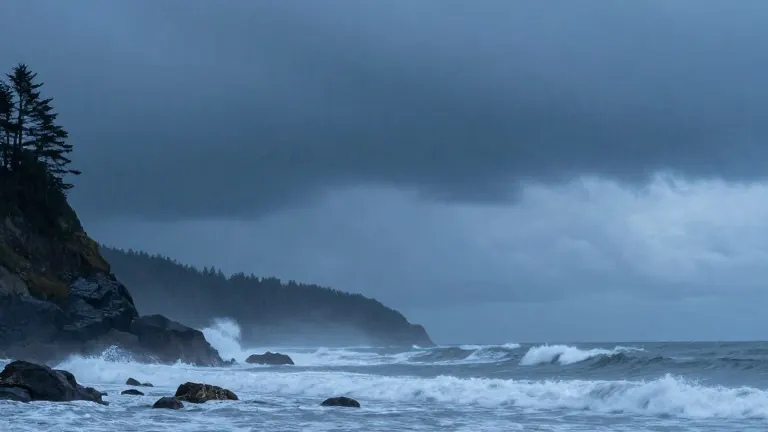
Two atmospheric rivers are set to strike parts of Oregon and Washington state on Friday and Saturday. The Pacific Northwest is experiencing heavy rain, high tides, and rising sea levels this week. Two previous atmospheric rivers already deposited multiple inches of rain on both states earlier in the week.
Josh Weiss, a meteorologist with the National Oceanic and Atmospheric Administration's Weather Prediction Center, identified compounding impacts from multiple atmospheric rivers as a primary concern. He noted that these events can lead to flash flooding, urban flooding, and landslides. Weiss stated that the current atmospheric river season, which runs from October to March, has started quickly.
An atmospheric river is a narrow band of water vapor driven by wind. F. Martin Ralph, director of the Center for Western Weather and Water Extremes at UC San Diego's Scripps Institution of Oceanography, described these bands as natural climate patterns. He explained that they can reach up to 2,000 miles in length and 600 miles in width. Weiss added that approximately 50 to 60 percent of rain in California originates from these systems.
The current weather patterns are coinciding with annual high tides known as King tides. El Niño warm ocean waters are also contributing to rising sea levels and fueling storm systems. Jeff Michalski, a meteorologist at the National Weather Service in Seattle, forecast that Washington's coast could face 20-foot swells this weekend. Ralph cited 40 years of data from the Federal Emergency Management Agency, noting that 90 percent or more of flood damage in the Western U.S. results from atmospheric rivers.
Residents in the Pacific Northwest are accustomed to heavy downpours, but these specific systems often carry nicknames based on their origin. A Pineapple Express, which moved across the Pacific Ocean from Hawaii in late October, caused severe flooding and multiple deaths in the Four Corners regions of the Southwest. Ralph noted that larger nor'easters on the East Coast can also contain atmospheric river characteristics.
Ralph tested the theory in 2015 that El Niño warm ocean temperatures strengthen atmospheric rivers. His research indicated the opposite relationship. He stated that atmospheric rivers do not follow the rhythm of El Niño. Climate scientists say there is insufficient data to connect the weather pattern directly to human-caused global warming, though a warming world does increase atmospheric water vapor.
Ralph emphasized the need to monitor these systems regardless of the year's classification. He advised keeping eyes on atmospheric rivers whether it is an El Niño year, a La Niña year, or a No Niño year.
More News · Columbus news · Report a business · Got a Story?