Bacterial infection, not bird flu, killed 500 penguins in Antarctica
Researchers identified avian cholera as the cause of mass deaths at the Danger Islands after initial tests for H5N1 yielded low virus loads.
By James Anderson ·
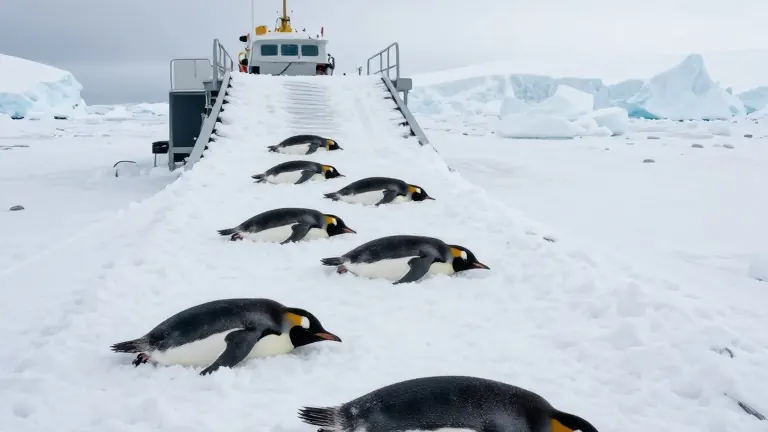
On a landing ramp in the Danger Islands, just off the Antarctic Peninsula, scientists found more than 537 dead Adélie penguins buried in the snow. The site, roughly the size of an airport runway, was part of a larger die-off that wiped out thousands of birds across the islands. Dr. Ralph Vanstreels, a wildlife veterinarian at the University of California, Davis, led the team that discovered the carcasses in March 2024.
The researchers initially suspected the high pathogenicity avian influenza virus, known as bird flu, which had reached Antarctica in late 2023. Vanstreels said the expedition was organized to investigate that specific threat due to global concerns about a panzootic. However, the team found that while bird flu was present, the virus loads in the dead birds were too low to explain the mass mortality. The carcasses were fresh, which made the low viral concentration puzzling.
Back in the Netherlands, colleagues analyzed the tissue samples under a microscope. They found bacteria in the tissues, pointing to avian cholera rather than a viral infection. This bacterial disease is distinct from human cholera and is known to kill birds worldwide, particularly in cold environments where the bacteria thrive. The team published these findings in the journal Proceedings of the Royal Society B in October 2026.
Dr. Amandine Gamble, an assistant professor at Cornell University, noted that the strain of avian cholera found in the penguins is very close to a strain found 5,000 miles away on Île Amsterdam in the Southern Indian Ocean. This connection suggests that Antarctica is more linked to the rest of the world than previously believed. Gamble said that researchers have not looked for this specific disease in the Antarctic Peninsula in 25 years, raising the possibility that similar die-offs have occurred without being recorded.
The arrival of bird flu in mainland Australia in June 2026 further complicated the picture. Australia had been the only continent free of the H5N1 virus until then. The virus did not arrive from the expected direction of Southeast Asia via migrating birds. Instead, scientists believe it traveled from Antarctica, spreading through mass mortality events among wild populations. Michelle Wille, a senior research fellow at the University of Melbourne, described the virus as traveling by mass mortality after mass mortality.
Since late 2021, the H5N1 virus has killed or cullled nearly 300 million poultry birds globally, according to the World Animal Health Information System. While avian cholera is not considered a major threat to humans because the bird-specific strain is distinct from the mammal-specific strain, it remains a significant killer of wild birds. The risk of human infection from a bird outbreak is generally low, Vanstreels said.
Antarctica is governed by the Antarctic Treaty, which has 58 parties including the U.S., France, Japan, and Russia. The continent serves as a shared space for science and peace, requiring international collaboration to track pathogens that do not respect borders. Gamble emphasized that the avian cholera outbreak is not a unique event and that continued monitoring is necessary. The team plans to keep checking for other diseases that may be mixing in the middle of these global health events.
More News · Columbus news · Report a business · Got a Story?