Manx Shearwaters Show Jet Lag Signs During Atlantic Flights
GPS data reveals slight directional errors in seabirds returning to British Isles colonies, linked to internal clock desynchronization.
By Nadia Khalil ·
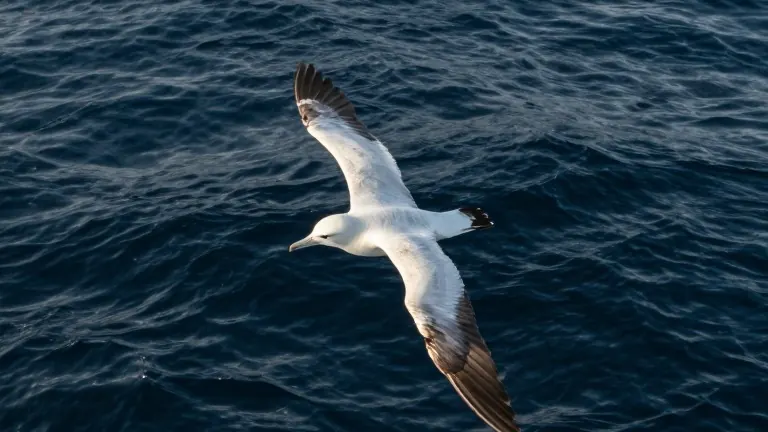
Manx shearwaters experience a form of jet lag when flying across the Atlantic Ocean.
A study published in the journal Science details how these seabirds become slightly disoriented during long transoceanic flights. The authors attribute the issue to the birds' internal biological clocks falling out of sync with the sun's position in the sky.
Manx shearwaters are common in the British Isles. Patrick Lewin, a behavioral ecologist at the University of Oxford, noted that while they resemble seagulls, they are closely related to albatrosses. These birds mate for life and lay a single egg. Partners take turns incubating the egg while the other hunts. For up to two weeks, the hunting partner searches for fish and squid in the North Atlantic, often traveling hundreds of miles from the nest.
Once full, the birds return to their colonies, often completing the journey in one day. This rapid travel raised the question of whether the birds suffer from time-zone changes. Lewin analyzed twenty years of data from GPS trackers attached to the birds. His team used this data to monitor flight paths. The researchers relied on the fact that shearwaters use the sun as a compass. To do this, they must know the time of day. The sun rises in the east, sits south at midday in the northern hemisphere, and sets in the west.
The data showed that the birds veered slightly off course during their return flights. The maximum deviation observed was seven degrees. On a 600-mile journey, this error caused a detour of about three miles. Lewin described the addition to the flight path as very small. The birds corrected their course to reach their partners and eggs.
Alice Boyle, a biologist at the Centre for Animals on the Move at Western University in Ontario, Canada, reviewed the findings. She was not part of the study. Boyle called the paper cool and valuable. She noted that many creatures, from corals to chipmunks, must navigate their environments. However, studies showing navigation decisions in action are rare. The GPS work allows scientists to observe how wild birds travel to remote locations.
The study provides direct evidence of navigational errors linked to circadian rhythms in a species that crosses multiple time zones. The findings come from long-term tracking of birds in the North Atlantic. The research team continues to analyze the collected flight data.
More News · Columbus news · Report a business · Got a Story?