
Bank predicts $80 billion quantum boom
Bank of America forecasts quantum computing will reach $80 billion in value by 2035, driven by AI breakthroughs.
By Nadia Khalil ·
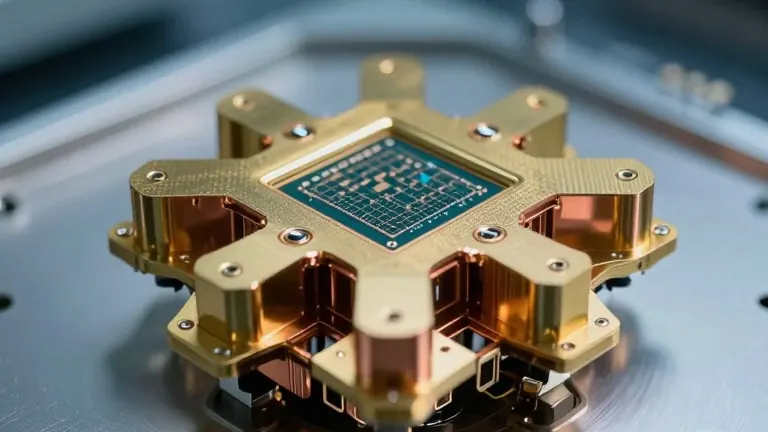
$80 billion is the value Bank of America projects for the quantum computing industry by 2035. The bank’s global strategist, Haim Israel, said the sector is accelerating due to artificial intelligence. This growth follows a period where quantum technology lagged behind AI in public discourse.
Israel heads the bank's global thematic research team and is its most senior Israeli employee. He told The Jerusalem Post that AI enabled a breakthrough in the last two to three years. The bank now estimates the industry, which currently earns over $1 billion annually, will reach $15 billion by the end of the decade.
The technology relies on qubits rather than standard bits. Qubits use quantum mechanical properties like superposition to perform calculations that are difficult for traditional machines. These particles are sensitive to their environment, which has historically caused errors and limited scaling. Israel said AI is now helping researchers control these systems and reduce error rates. He noted that 2022 was an inflection point as qubit counts rose and errors fell.
Bank of America moved its estimate for Q-Day to 2030. This is the point when quantum computers might break widely used encryption methods. The bank sees a reciprocal relationship between the fields. Israel stated that AI helped build quantum capabilities, and quantum is now bringing AI to the next level. He compared the current stage to the period before ChatGPT brought generative AI to mainstream attention.
Israel said the quantum field is not yet at its ChatGPT moment. However, an ecosystem of hardware and software makers already exists. Startups focused on encryption are also present. He expects quantum computing to remain specialized rather than becoming a mass-market technology for billions of users.
Potential applications include healthcare, financial services, chemicals, energy, and logistics. These sectors face complex calculations that quantum systems could speed up. Israel expressed concern about the lack of regulation and government intervention. He compared the situation to nuclear energy, where the technology can produce both electricity and weapons. Companies are developing internal safeguards, but governments struggle to keep pace with the technology.
Israel described the technology as neutral and dependent on human choices. He said the field is up to us to use in the right way. He noted that significant technical and commercial hurdles remain before the broadest promises of quantum computing can be delivered.
More Business · World news · Customer Complaints · Report a business · Got a Story?