Columbus Ballot Faces Dual District Proposals
Residents will vote on two competing measures to replace at-large council seats, creating confusion over which plan takes precedence if both pass.
By Ethan Mitchell ·

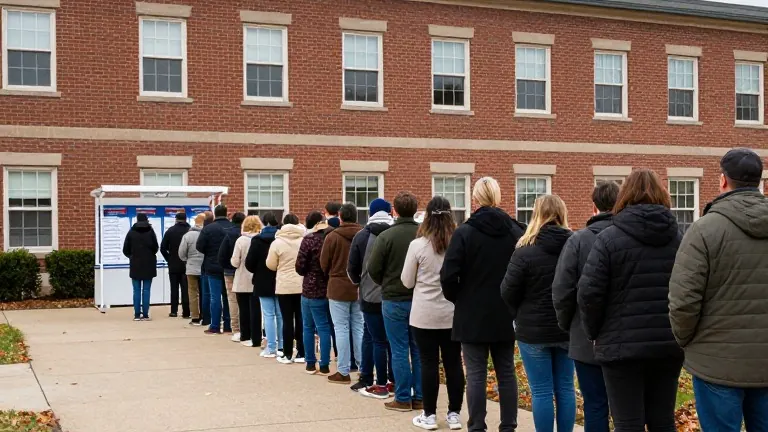
Columbus voters will decide on November 3, 2026, between two distinct plans to restructure city government, with the outcome potentially creating 13 council seats. The ballot includes Issue 8, a citizen initiative proposing nine true ward-based districts, and Issue 9, a council-backed alternative that adds four at-large seats to the same nine districts for a total of 13.
Under either proposal, candidates must live in the district they represent, and only residents of that district can vote for them. This change departs from the current system, where the entire city votes for every council seat. City Council officials stated that if both issues receive more yes votes than no votes, Issue 9 will take priority because the two measures are complementary. Franklin County Board of Elections Deputy Director David Payne confirmed via email that the board will certify the results for each issue, but noted that the council will determine the final structure if both pass.
Supporters of Issue 9, including Franklin County Democrats, local labor groups, and the local NAACP, argue the measure strengthens representation. Critics, such as Black activist Jonathan Beard, contend that Issue 8 would preserve district lines drawn by City Council in 2021. Beard wrote in a recent op-ed that maintaining those current majority-white districts is problematic under Section 2 of the Voting Rights Act of 1965, which protects geographically concentrated minority groups from vote dilution. Issue 9 includes a provision to redraw district lines before 2029 using a citizen-led committee.
Local activists expect the new structure to produce more competitive local races. David Harewood, a Black activist and member of the Columbus Dispatch Editorial Board Advisory Committee, predicted hotly contested elections in the Northeast, Hilltop, and Clintonville neighborhoods. Rebecca Hunley, chair of the Franklinton Area Neighbors Civic Association, said her District 7, which covers much of the central city, will likely become more competitive. She noted that allowing candidates to focus on specific areas will give residents a stronger voice on safety and economic development issues.
Some residents remain skeptical about the financial dynamics of district elections. Posts on Columbus Reddit warned that business groups like the Columbus Partnership could buy ward seats for less money than city-wide seats. Former mayoral candidate Joe Motil expressed concern that the Franklin County Democratic Party might endorse handpicked candidates. Despite these concerns, Motil agreed that district elections would be more competitive than the current at-large system. Adrienne Hood, who ran for District 4 in 2023, said she is still deciding whether to run again, emphasizing the need for greater civic education in her community.
More Politics · Columbus news · Report a business · Got a Story?