Defence Minister Claims Opposition Delays Bill on Troop Deployments
Helen McEntee accused Sinn Féin of stalling legislation to remove the United Nations mandate requirement for Irish military missions.
By Nadia Khalil ·
Defence Minister Helen McEntee accused the Opposition on Thursday of deliberately delaying a government bill designed to remove the triple lock on Irish military deployments. The legislation seeks to abolish the constitutional requirement that the United Nations approve missions involving twelve or more members of the Defence Forces. McEntee stated the government aims to enact the bill before the end of the year.
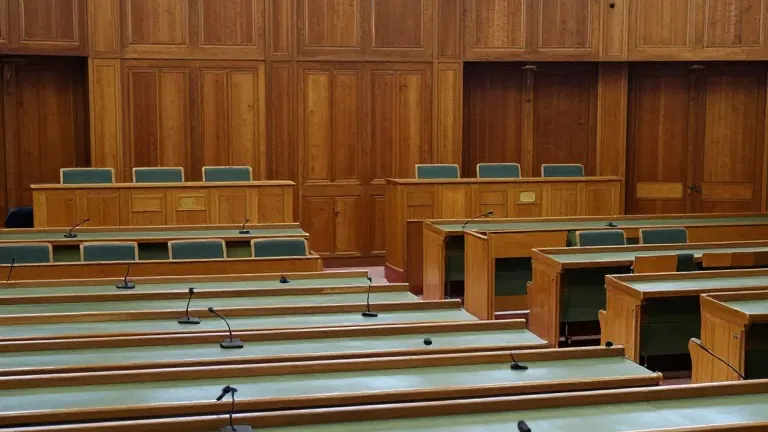
The dispute has intensified in the Dáil, with both sides deadlocked over the timing of the committee stage. McEntee wrote to Rose Conway-Walsh, the Sinn Féin TD for Mayo and chairwoman of the Oireachtas defence committee, in October to signal her availability for the earliest possible hearing. Conway-Walsh has not yet committed to a specific date for the hearings.
Conway-Walsh indicated the committee would hold a private meeting on November 12 to plan the process. She stated the matter needs to be dealt with in a thorough and transparent manner. Government members of the committee have since sent letters requesting an early date, but Conway-Walsh has declined to set one before the internal meeting.
During exchanges in the Dáil this week, McEntee accused Sinn Féin of filibustering the legislation. She told the house that the party is clearly trying to frustrate and delay the time. McEntee noted that alternative methods exist to proceed with the committee stage, including holding the session in the main Dáil chamber rather than in committee rooms.
Several TDs, speaking on the condition of anonymity, indicated that hundreds of amendments could be tabled to the bill during the committee stage. The triple lock currently requires government approval from the United Nations before armed international forces can be joined by a substantial number of Irish troops. The government proposes to remove this specific UN requirement.
Minister for State Thomas Byrne and McEntee have rejected suggestions that the change would lead Ireland to join military alliances such as NATO or a European Union defence pact. McEntee argued that Irish neutrality is based on non-military alliance status. She cited Article 29.4.9 of the Constitution, which prevents the state from adopting EU decisions that align with a common defence including Ireland.
The United Nations Interim Force in Lebanon mission, mandated in 1978, is set to end at the close of the year. McEntee expressed a desire for the Defence Forces to join an EU mission in Lebanon to support local institutions. She acknowledged that if a force protection element emerged, changes to the triple lock would be necessary for Irish involvement. She dismissed claims that the removal of the lock would result in Irish troops fighting alongside the Israel Defense Forces against Hizbullah, calling the narrative completely false based on reports from senior Defence Forces management in Lebanon.
Disquiet has emerged within Fianna Fáil regarding the current state of the bill. Former defence minister Willie O'Dea, a TD for Limerick City, drafted an amendment to retain a strong link to the United Nations. He has sent the proposal to Byrne and stated that up to 20 party colleagues support his view. O'Dea said on Thursday evening that if the government does not accept the amendment during the committee stage, the party will have to consider its options.
More Politics · Dublin news · Report a business · Got a Story?