Southern Midterm Results Reshape National Political Map
Democratic gains in key states and record Black voter turnout are altering the electoral landscape for 2028.
By James Anderson ·
The political center of gravity in the United States shifted decisively toward the South following Tuesday's midterm elections. Democrats secured Senate victories in North Carolina, South Carolina, and Texas, while Republicans retained control of the White House and the Senate. The results confirmed that both parties must now compete in the region to maintain or gain national power.
The shift began earlier this year when the Supreme Court ruled on a case that reduced protections under the Voting Rights Act. In response, Republican-led states such as Alabama, North Carolina, Texas, and Florida redrew House districts. The goal was to create seats that could withstand midterm backlash. However, the strategy largely failed. Democrats are poised to net several seats in the region, and Republicans have won only one of the targeted seats as of Wednesday night.
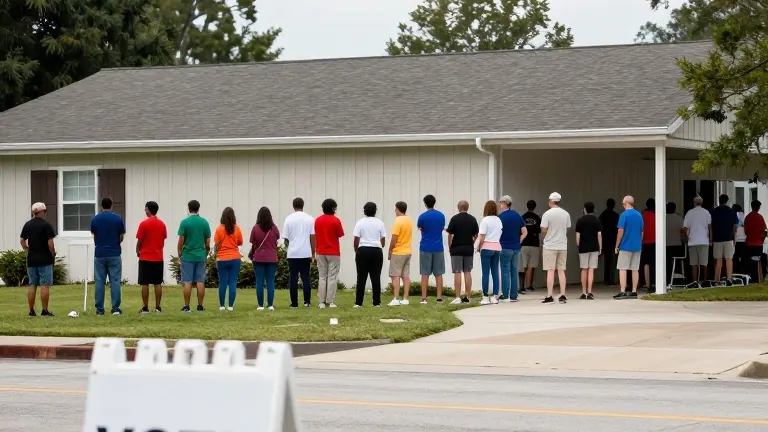
Voter turnout in the South surged, particularly among Black voters in states like Louisiana and Georgia. In South Carolina, where Democrat Annie Andrews won a U.S. Senate seat, the state recorded its highest turnout for a gubernatorial election year. In Louisiana, Democrat Jamie Davis lost the Senate race to Julia Letlow by less than two percent, a narrow margin in a state President Trump won by more than 15 points in 2024. Mississippi remains too close to call, with Democrat Scott Colom leading incumbent Cindy Hyde-Smith by fewer than 1,200 votes.
Ashley Kennedy Shelton, of the Louisiana-based Power Coalition for Equity and Justice, said that the court decision felt personal to Black voters. She noted that rising costs for electricity, gas, and food are impacting households directly. "I think that for all the folks that used to say, 'I don't do politics!' I think they realize that politics is absolutely doing them, and they have to get involved," Shelton said.
State-level races mirrored the national trend. In Georgia, Democrat Jon Ossoff won his Senate race by 18 points. That victory helped former Atlanta Mayor Keisha Lance Bottoms win the governor's race. Democrats also swept every other statewide office in the state and gained control of the state utility regulator. They are set to win a majority in the state House.
In North Carolina, former Governor Roy Cooper won by 20 points. His victory is expected to flip multiple congressional seats and shift control of the state House to Democrats. In Texas, Democrats won a majority of seats in their state House. Republican supermajorities in the state Houses of Florida and South Carolina have ended. Down-ballot gains also occurred in Alabama, Arkansas, Kentucky, and Tennessee.
The 2028 presidential race is already taking shape around these results. Both parties are investing in the region ahead of the next election cycle. Former Transportation Secretary Pete Buttigieg, Georgia Senator Raphael Warnock, and Kentucky Governor Andy Beshear campaigned in tight races for Democrats. On the Republican side, Texas Senator Ted Cruz and Vice President JD Vance focused their efforts on the South.
Texas, Florida, Georgia, and North Carolina together hold more than a third of the 270 electoral votes required to win the White House. Republicans held the Florida governor and Senate seats, but the margins were closer than expected. This makes the state a key target for both parties. The combination of southern swings and expansive majorities in Congress ensures that the path to the White House in 2028 will run through the South.
The final counts in Mississippi and several House districts will be determined in the coming days. The Associated Press is monitoring the remaining races. The outcome of these contests will finalize the balance of power in both chambers of Congress and in state legislatures across the region.
More Politics · Columbus news · Report a business · Got a Story?