Hackers Target Fridges in Global Food Plants and Military Bases
Iranian-linked cyberattacks have disrupted refrigeration systems in Israel, Europe, and the United States, spoiling food and straining critical infrastructure.
By James Anderson ·
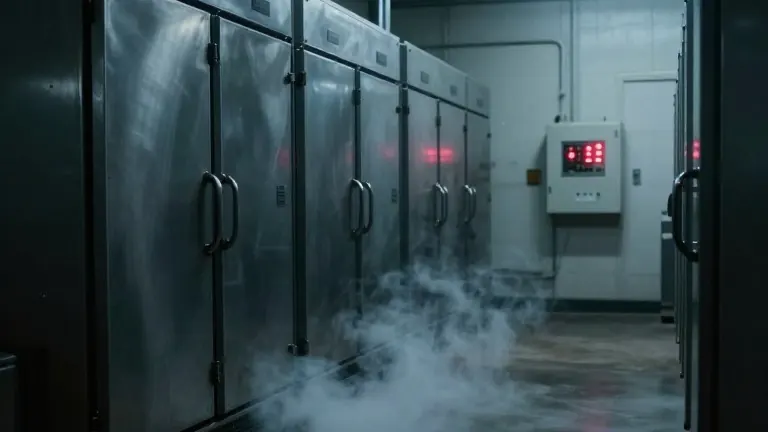
Employees at a major Israeli food production plant watched as office printers output pages of threatening messages. Corporate computers held code designed to delete internal data. An engineer later found smoke rising from industrial freezers, revealing broken compressors and spoiled food. The facility stopped operating for more than a week while engineers waited for replacement parts from abroad. Omri Segev Moyal, head of the Israeli incident response firm Profero, said the attack left a lasting mark on the people in charge.
Moyal attributes the breach to Iranian military hackers operating under the name Cyber Isnaad Front. The group is also linked to influence campaigns targeting U.S. elections in 2024. The attack occurred during the final days of an Iran-Israel ceasefire. Since then, unidentified hackers have targeted refrigeration controllers worldwide. Spoiled produce and lost business time have resulted from strikes on U.S. military bases in August, French supermarkets in October, and food stores in Sweden, Estonia, Ireland, Luxembourg, the Netherlands, and Belgium in early November.
Moyal described the pattern as targeted attacks built against Israel, tested in Europe and the U.S., and now unleashed globally. Josh Corman, a former cybersecurity official at the Cybersecurity and Infrastructure Security Agency, noted that connecting industrial refrigeration to the internet exposes these systems to accidents and adversaries. He warned that while current attacks hit food, future strikes could target temperature-sensitive drugs and laboratory materials.
The hacking group first targeted a small chain of kosher grocery stores in Israel in March. A video posted to social media showed customers handling soft, spoiled meat packages. The company has not responded to requests for comment. In May, the larger food plant attack occurred. Hackers broke into industrial controllers, adjusted safety limits, opened gas pressure valves, changed credentials, disabled alerts, and destroyed forensic evidence. Moyal said the compressors were blown up through overuse, not explosive force, making them unrecoverable.
Ari Ben Am, co-founder of threat intelligence firm Telemetry Data Labs, tracks the group’s activities. He said Cyber Isnaad Front operates on behalf of the Iranian military and possesses high technical capability. He found evidence that the group may share digital tools, including wiper malware, with other Iranian hacking units. One such unit, Cyber Av3ngers, hacked U.S. water and wastewater facilities in 2023. Ben Am noted that Cyber Isnaad Front is the only Iranian group he has seen use human actors in propaganda videos.
In August, the Pentagon described a possible refrigeration disruption at multiple U.S. military commissaries. At least nine locations reported outages based on social media posts and independent confirmations. The Pentagon has not officially acknowledged hacker responsibility. However, the Defense Criminal Investigative Service and the Army Criminal Investigation Division are investigating the incidents alongside French law enforcement. Two former officials said investigators treat the outages as a cyberattack and point to Iran, though confidence in that attribution remains low.
Public government contracting documents show the Defense Commissary Agency uses Danfoss refrigeration remote control systems. French officials identified these specific Danfoss machines as a vector for the October supermarket hacks. Some U.S. installations operate Danfoss controllers from the mid-2000s that can no longer receive secure software updates. A Danfoss spokesperson said the company is in close contact with affected customers. The firm advises installing latest firmware, removing devices from the internet, and operating behind a firewall and VPN.
Social media posts from U.S. bases describe specific failures. Fort Huachuca in Arizona reported an overnight equipment failure that put all freezers into defrost mode without a power outage. The account stated the process heated up all the food and declared it spoiled. Fort Irwin in California said technicians were working around the clock to repair the systems.
More News · Columbus news · Report a business · Got a Story?