Half of Alaska's breeding shorebirds are declining
Pectoral sandpipers fly 17,000 miles annually, but warming temperatures are disrupting the timing of their food supply in the Arctic tundra.
By Nadia Khalil ·
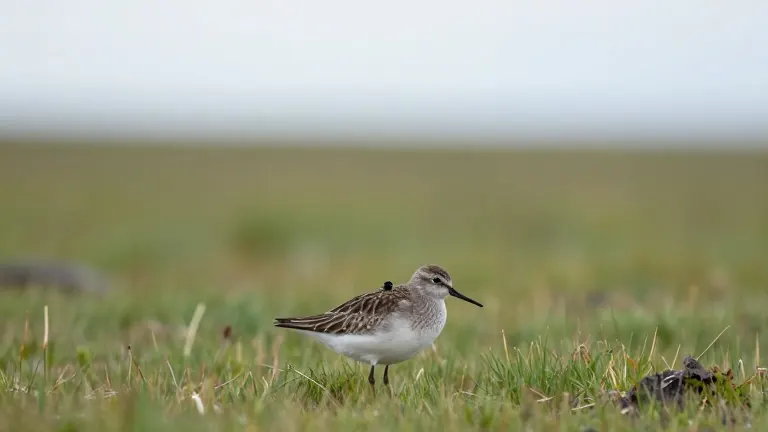
Almost half of the 41 shorebird species that breed in northern Alaska are declining, according to data collected over the last 24 years. Some species have lost more than half of their population over the past three decades. Pectoral sandpipers, which weigh about three ounces, fly more than 17,000 miles each year between Alaska and Argentina. Unlike larger birds that soar on wind currents, these birds flap their wings for the entire journey.
Researchers have long sought to understand how such small birds complete these vast migrations. Rick Lanctot, a wildlife biologist with the U.S. Fish and Wildlife Service, has tracked these birds for more than two decades. He notes that the birds are miraculous migrants that rely on extreme adaptations to survive. Their success depends on precise timing. They must arrive in the Arctic when insect populations peak. However, warming climates are causing spring to arrive earlier, which shifts the timing of food availability.
This mismatch poses a serious threat to the birds. When spring comes early, insects emerge before the chicks hatch. The chicks then miss their peak food supply. Amanda Koltz, an assistant professor of integrative biology at the University of Texas at Austin, explains that the quality of food matters as much as the quantity. Different insects contain different nutrients. If the mix changes, the birds may struggle to produce eggs or raise healthy young. Julia Berliner, a graduate student at the same university, uses a modified leaf vacuum to collect insect samples from the tundra to measure these nutritional changes.
Local communities have noticed the shift for decades. Robin Mongoyak, a wildlife guide who grew up in Utqiaġvik, says the number of birds has changed significantly in the last 35 years. He notes that sea ice is breaking up earlier than in the past. The Inupiat people view the arrival of these birds as a special time after the long winter. Mongoyak says the environment is shifting rapidly, with Arctic temperatures rising four times faster than the rest of the globe.
Scientists are studying how birds might adapt to these changes. Some species can adjust their nesting schedules by a few days, but this may not be enough to keep pace with the warming climate. Habitat loss from development and drought is also reducing the wetlands and grasslands the birds use for rest stops. Nathan Senner, a shorebird researcher at the University of Massachusetts Amherst, warns that if declines continue, extinction is a possibility for many species.
Researchers are now focusing on how to manage environments to help these birds adapt. They are examining whether birds rely on environmental cues or learned behaviors to time their migrations. Some cues, such as day length, do not change even as temperatures rise. This makes it difficult for birds to adjust their schedules accurately. The team continues to attach tiny tracking tags to birds, logging their GPS positions every 15 minutes to map their routes.
The next step is to determine the specific tactics these birds use and how managers can support them. Senner says no single species can be ready for every type of change. The data will help guide conservation efforts in the regions where these birds rest and feed.
More News · Columbus news · Report a business · Got a Story?