Irish public sector strike set for November 12 after pay talks stall
About 100,000 workers are expected to join a 24-hour stoppage following failed negotiations with the government.
By Emily Brooks ·
The Irish public sector is scheduled to shut down on Thursday, November 12, after trade union leaders confirmed that pay negotiations with the government have stalled.
The strike date was moved from Wednesday, November 11, to Thursday. Approximately 100,000 public service employees are expected to participate in the 24-hour stoppage.
The action involves the same public service groups as the previous strike, though Newstalk journalist Ella Anderson noted that a few more sectors may receive derogations. She stated that unions are also considering escalating their work-to-rule tactics and have not yet set a date for a potential further strike after November 12.
Unions expressed dissatisfaction with the progress of pay deal discussions, describing the situation as a pretty significant impasse. They said the government has failed to present an offer that reflects the workload of public sector workers and accounts for inflation. The unions argued that the current proposal does not address the cost of living crisis fairly.
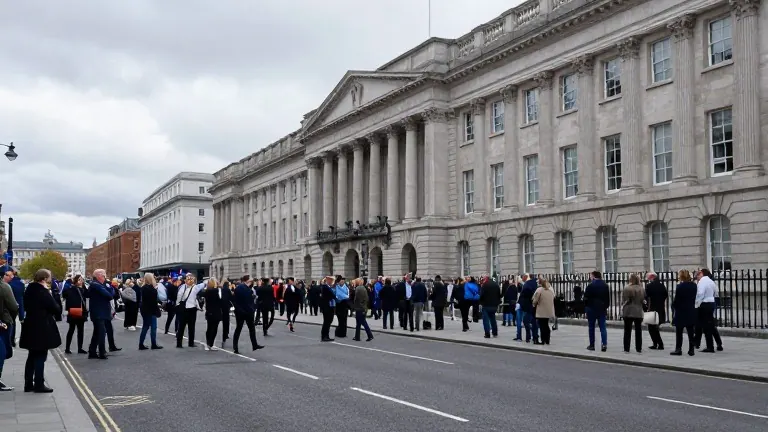
The strike will coincide with rallies held across the country. A major gathering of public service workers is planned in Dublin city, alongside smaller regional rallies. The timing overlaps with the ninth meeting of the European Political Community, an event in Dublin that brings together European heads of state and government for informal discussions.
Kevin Callinan, chair of the ICTU public services committee, stated that moving the strike to Thursday was driven by logistical reasons rather than an intent to impact the EU presidency events. He described the specific logistical constraints as various reasons for avoiding another Wednesday strike.
The European Political Community meeting is set to host leaders of key European and international institutions for strategic talks in Dublin during the same day as the industrial action.