Secretary LaRose Monitors Ohio Election Night from Downtown Command Center
State officials track 8,834 precincts and social media feeds as 1.7 million early votes join today's in-person turnout.
By Nadia Khalil ·
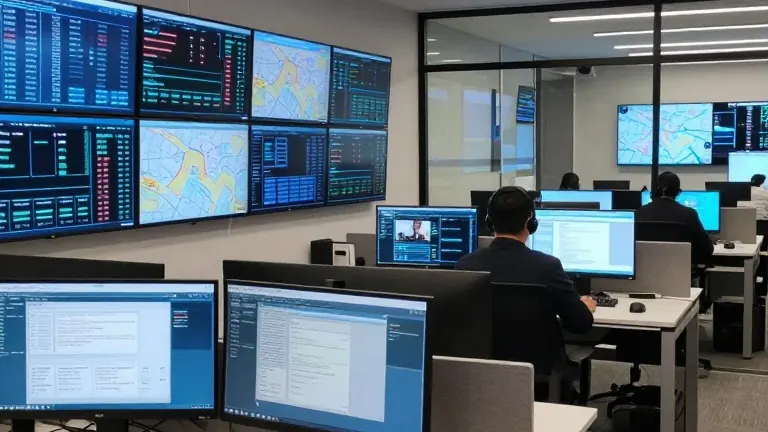
Secretary of State Frank LaRose and his team are tracking the flow of ballots from a dedicated command center in downtown Columbus. The office is overseeing the work of 88 county boards of elections across the state. This operation covers 8,834 precincts located in 3,042 polling places. LaRose noted that millions of voters cast ballots today, joining the 1.7 million who already voted in the early voting period.
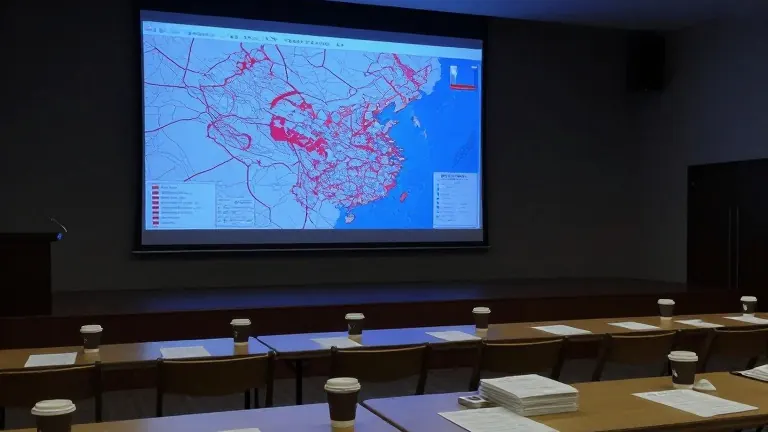
The monitoring effort spans two floors of an office building. Staff members in a social media section watch platforms including TikTok, Instagram, Reddit, and X for national trends. LaRose said the team looks for patterns that appear in other states before they become widespread in Ohio. He mentioned that several bomb threats have been reported across the country today. Although all threats have turned out to be false, LaRose described them as easy to execute and impactful on operations. His office is working with county boards and law enforcement to manage these isolated incidents in Ohio.
A separate Election Integrity Center houses compliance analysts and investigators. They review voter complaints and track specific incidents like fire alarms or security threats. Nearby, a readiness and response center connects state and federal partners. This group includes the Emergency Management Agency and the U.S. Department of Homeland Security. A glass-walled command room next door hosts leaders in communications and regional operations. These teams coordinate their efforts as the day progresses.
LaRose reported that no major problems have emerged so far. He pointed to a specific incident where a fire alarm triggered in one precinct. Poll workers moved voting machines into the parking lot to keep lines moving. This allowed voting to continue without a full shutdown. The office also monitors power outages and law enforcement activity in real time. Data from these sources feeds into the state's central reporting system.
On a lower floor, the election night reporting room is preparing for the final hours of the day. Elections officials have rehearsed scenarios for when polls close. Results from local boards will be verified and then uploaded to the secretary of state's website. LaRose expects website traffic to remain high until approximately 11 p.m. He anticipates that most races will be called by that time, leaving only about 10% of precincts to report.
The final 10% of precincts often present logistical challenges. LaRose cited examples such as a poll worker's car breaking down or an election official shutting down a machine incorrectly. These errors require staff to recount votes from the beginning. He noted that these issues typically resolve between 11 p.m. and 2 a.m. Once the boards complete their canvases, the state will release the final data for the night. This allows staff to conclude their shifts.
LaRose emphasized that election night results are not yet certified. The final official count will not be complete for a couple of weeks. In the meantime, he advised the public to watch a specific metric on the website: the number of outstanding ballots. This figure includes provisional ballots and UOCAVA ballots from overseas and military voters. These votes can still be registered and added to the total even after the state reports 100% of precincts on election night.
The state has specific rules for recounting votes. An automatic recount is triggered if the margin between candidates is within a quarter of a percent. If the gap is larger than that, candidates may request a recount. In those cases, the candidates are responsible for paying the costs associated with the recount process.
More Politics · Columbus news · Report a business · Got a Story?