U.S. Citizen Blocked From Home in West Bank for Three Weeks
Naji Abu Awad flew from Texas to find Israeli soldiers occupying his family house in Turmus Ayya, a move his family says lacked a court order.
By Ethan Mitchell ·
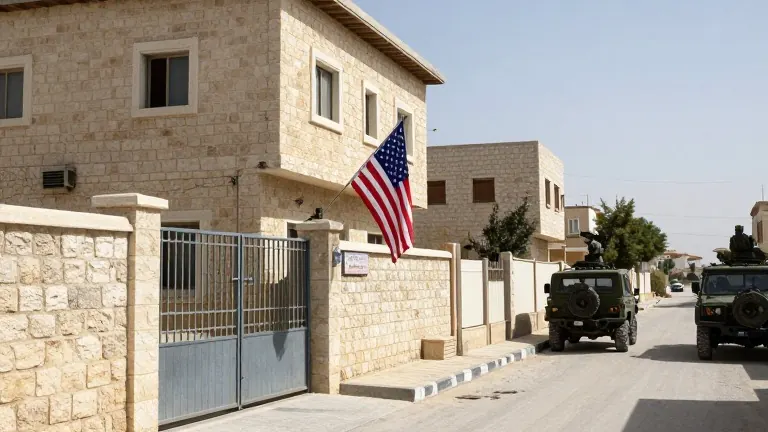
COLUMBUS, Ohio. Naji Abu Awad, a resident of Texas, arrived at his family home in Turmus Ayya, in the occupied West Bank, on November 12 to find Israeli soldiers inside. He had flown from the United States to his property, which he built, carrying an American flag and his luggage. Despite his citizenship and ownership, Abu Awad said he was denied entry to the house.
The military takeover of the residence began on October 25. Israeli forces forced open the property's gate on that date. Abu Awad, who was in Texas at the time, watched the event through the home's surveillance cameras. He communicated with the soldiers remotely. He told them his family was abroad and that his brother inside the house could open the door for an inspection. He asked the troops not to damage the property.
The soldiers disabled the surveillance cameras on October 25. They returned the following day and remained inside the home. Abu Awad said the troops did not provide a satisfactory explanation for their continued presence. No court order or document authorizing the occupation of his private residence was presented at that time, according to Abu Awad.
When Abu Awad reached Turmus Ayya on November 12, the soldiers showed him a document written entirely in Hebrew. Abu Awad said the document contained neither a judicial order nor legal authorization permitting the army to occupy his residence. He asked the soldiers why they were there and when they intended to leave. The questions went unanswered. Abu Awad said he was threatened with detention if he did not comply.
Abu Awad's family made repeated attempts to obtain assistance from the U.S. Embassy in Jerusalem. They reported that those efforts did not produce a satisfactory resolution. U.S. Ambassador Mike Huckabee serves as the head of the diplomatic mission in Jerusalem. The embassy's consular staff can communicate with local authorities and help citizens with emergencies, though they cannot override another country's military decisions.
The incident in Turmus Ayya occurs amid escalating pressure across the West Bank. UNICEF's October 2026 situation update documented at least 1,216 Palestinians killed between October 7, 2023, and September 9, 2026. The report noted that 263 of those killed were children. More than 13,300 people were injured during the same period.
Israeli military operations and settler attacks in the region have included home demolitions, the bulldozing of agricultural land, and restrictions on movement. Local sources cited by WAFA reported that approximately 4,000 olive trees were uprooted in Turmus Ayya alone. Palestinian officials warn that these actions are undermining the possibility of establishing a viable Palestinian state, contrary to United Nations resolutions.
Turmus Ayya has a substantial Palestinian-American community. The town has experienced escalating violence, attacks, and land seizures in recent years. Abu Awad's experience is part of a pattern of military appropriation of civilian homes across the area. He remains outside his house in Turmus Ayya as of this week.
The U.S. State Department has not issued a public statement specific to Abu Awad's case. Secretary of State Marco Rubio and President Donald Trump have not commented on the specific incident in Turmus Ayya. Abu Awad continues to live out of his luggage while waiting for a response from local authorities and the U.S. Embassy.
More World · Columbus news · Report a business · Got a Story?