Nepal's Floods Leave 100,000 Displaced as Winter Approaches
Glacial melt triggered a massive flood that killed at least 1,500 people and destroyed infrastructure across the region.
By James Anderson ·
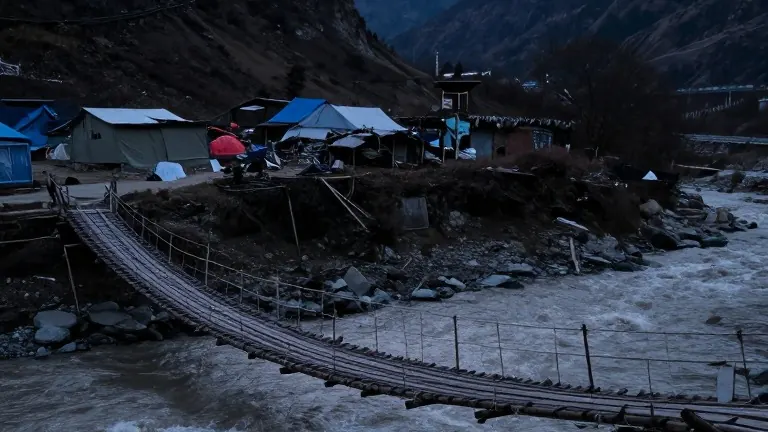
More than 100,000 people in Nepal have had their lives upended by devastating floods sparked by glacial melt. At least 1,500 individuals have died in the disaster, while more than 5,000 remain missing. The event, worsened by climate change, has left thousands living in temporary shelters or tents as winter nears.
Januka Dhital was preparing snacks for a catering event in her home in Uttargaya when a man on a scooter warned her of the incoming flood. She stepped outside to see what she described as darkness, dust, and the hillside coming down. She grabbed her young son and rode on the back of the scooter to higher ground. Her husband and daughter were at work and school. Hours later, the family reunited. Dhital said her husband was naked, covered in blood, and badly injured, but alive. "It felt unbelievable that our family had survived," she said. Their home was obliterated along with thousands of others.
The United Nations reports that the flood damaged or destroyed seven health facilities, 23 schools, 10,000 toilets, and 64 water systems. Shyam Pathak, a chief of health at UNICEF, stated that the magnitude of devastation is unimaginable. He noted that international attention has fallen as the response turns to helping communities rebuild. Many aid workers are simultaneously rebuilding their own lives. Dhital worked through a training program with the nonprofit Helen Keller Intl to regain stability. She now helps screen for malnutrition in her community.
Preliminary data shows a sharp rise in moderate acute malnutrition in the area. In Naukunda Gaunpalika, the rate jumped from 0.8 percent in June to 8.7 percent in October, according to Pooja Pandey Rana, who directs Helen Keller's work in Nepal. Pandey Rana called it a big jump driven by the flood's fallout. Families lost gardens and farms, forcing them to rely on dried and packaged foods. Poor sanitation and a lack of clean drinking water have compounded the issues. Over 100 bridges have been destroyed, severing mountain roads that served as lifelines for communities in the upper north.
Pushmaya Tamang, a community aid worker from Nuwakot, helps reach isolated areas by crossing makeshift bridges. She said the structures shake and can overturn when people cross from both directions. Her village has essentially disappeared after the floods. "Our hearts cannot bear to see the destruction," Tamang said. She lost her younger sister in the disaster. She and other workers are providing counseling and supplies, noting that they often lack the words to comfort grieving families. Pathak said health workers are back on the job despite being victims themselves.
Winter presents distinct challenges for survivors living in tents. Ayush Joshi of Save the Children noted that cold temperatures, overcrowding, and poor ventilation increase health risks. Responders are winterizing tents and providing medical care. Preliminary estimates place the cost of rebuilding at roughly $5 billion. The U.N. Climate Fund approved $20 million for recovery, and donors have contributed over $100 million, but the total is still far short of what is needed. Plans for rebuilding homes, water systems, and schools are still being developed.
More World · Columbus news · Report a business · Got a Story?