World Leaders React to Democratic Sweep in Midterms
International headlines and official statements from Europe, Asia, and the Middle East focus on cost of living, war, and shifting alliances following the U.S. election results.
By Ethan Mitchell ·

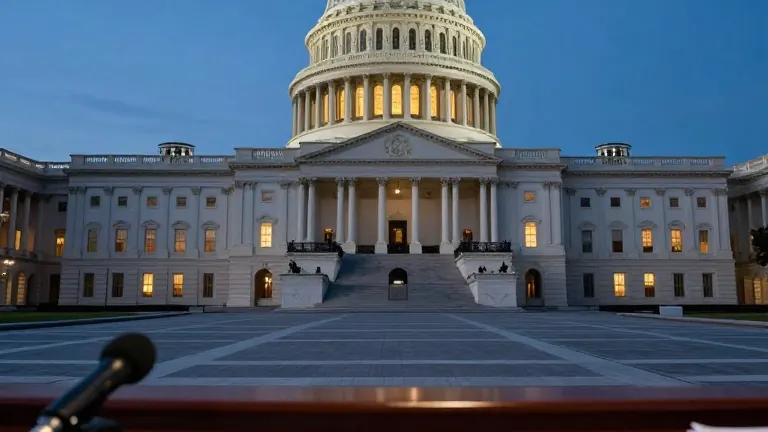
Three colors have dominated the international media coverage of the November 3 U.S. midterm elections: blue, red, and the specific shade of blue used by French and British outlets to describe the Democratic victory. The French newspaper Libération labeled the result a blue wave, while Britain’s Daily Mail called it a historic blue tsunami. The Times of India ran a headline referring to midterm blues for President Donald Trump.
Nations currently engaged in conflict watched the results closely with varying degrees of optimism. The Kyiv Independent, a Ukrainian outlet, framed the Democratic control of Congress as a blow to Trump and a potential boost for Ukraine. In contrast, Russia’s state-run Rossiyskaya Gazeta suggested the outcome would harm Ukraine. The Russian paper argued that Trump’s anger would shift toward Europe, urging Brussels to brace itself.
In the Middle East, Iran’s Tehran Times compared the election to Operation Midnight Hammer, a military strike against Iran in June 2025. The article featured a cartoon of a man using a hammer on a mini-Trump in a whack-a-mole game. This imagery reflected concerns that the renewed war between the United States, Israel, and Iran since February has driven up oil prices, a key campaign issue.
Israeli newspapers focused on the implications for U.S. support during the war in Gaza. The Times of Israel highlighted the election of Democrat Abdul El-Sayed to the U.S. Senate in Michigan, noting his pledge to withhold funding for what he called apartheid and genocide. Haaretz, an Israeli paper, noted that El-Sayed’s victory showed opposition to Israel is not a barrier to winning battleground states.
British Prime Minister Andy Burnham said the world now has a chance to unite around the cost of living. Speaking to reporters on Wednesday, he stated that he cannot reduce pressure on people’s finances until the conflicts in the Middle East and Ukraine are resolved. He emphasized that these are the primary issues the global community must address now.
Spanish Prime Minister Pedro Sánchez, who has had a tense relationship with Trump, posted on social media that American society voted against policies that impoverish people, against hate, and against climate denialism. South African President Cyril Ramaphosa, voting in his own municipal elections, said the people of America have spoken. He expressed hope that the results would introduce a new era in world relations and foster a coming together of minds.
European leaders offered measured responses. German Defense Minister Boris Pistorius called the Democratic win historic and said Berlin would continue cooperating with Washington. Norway’s Prime Minister Jonas Gahr Stoere described the results as a powerful signal of a change of course among American voters, noting that voices in U.S. politics are now closer to Norway on climate and foreign policy. A China Foreign Ministry spokeswoman called the elections an internal affair but said China remains willing to strengthen communication and manage differences with the U.S.
In Israel, analysts noted the timing of the U.S. results coincides with domestic political uncertainty. Prime Minister Benjamin Netanyahu lost his parliamentary majority in elections held on October 27. Israel-American analyst Mairav Zonstein observed that Netanyahu effectively lost two elections in the last week. Opposition leader Yair Lapid said the U.S. results eliminate the possibility of a unity government led by Netanyahu.
More Politics · Columbus news · Report a business · Got a Story?