Ohio State workshop trains students to spot job and scholarship scams
Fisher and Glenn college staff walked students through fake job postings, phishing emails and scholarship fraud at a session in Page Hall.
By James Anderson ·
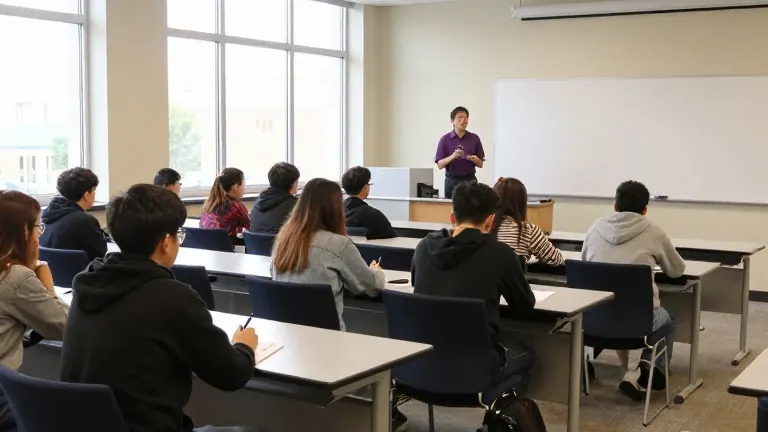
The Ohio State University held a free fraud prevention workshop at Page Hall on its Columbus campus, led by Kate Hallihan, senior assistant dean of students at the John Glenn College of Public Affairs, and Ericka Wicks, a Fisher College of Business alumna who works as a community manager at Chase Bank. The Fisher College of Business and the John Glenn College of Public Affairs presented the session together.
Hallihan told students to watch for fake job and internship listings that ask applicants to pay money or hand over bank account details to secure a position, get paid, buy supplies, or process other claims. "It comes across as a legit job, and it's very exciting, and they try to move quickly, and then they ask you for money up front or a bank account up front in order to deposit your first paycheck or advance," she said. "If it sounds too good to be true and if they're asking for money up front, those are two big red flags."
The workshop also covered fake scholarship offers that request personal information, apartment rental listings requiring nonrefundable deposits, debit and credit card fraud, investment and crypto schemes, and identity theft. Wicks told students to guard their identities on social media and to ignore messages from strangers. She described a case in which someone using a social media app claimed to be an Ohio State student and asked to connect with her about her experience as an alum.
Wicks said she grew suspicious when that person proposed meeting over Zoom and brought a third person into the call. "That was a red flag. Why would a student want to invite .. somebody else to the conversation? It wasn't making sense," she said. When the account asked about meeting on campus, Wicks never heard back. She also warned against phishing emails that imitate banks or property management companies, noting that typos, misspelled sender addresses, and links promising payments, gifts, or refunds are warning signs. "It just seems off in the formatting," she said. "Delete it, block it, report it, so you don't accidentally click on any of these types of links."
Other guidance at the session included not sharing personal or financial details in response to unsolicited contact, resisting pressure to act immediately on a solicitation, using strong passwords on all accounts, blocking unwanted calls and texts, and registering at Donotcall.gov for the National Do Not Call Registry.
Kayah Israel, a business and finance major, said she plans to apply what she heard about protecting debit and credit cards when making purchases. "I'm interested in learning more credit card information for young people," Israel said. Samiyah Lewis, a business information systems major, said the section on scholarship scams stood out to her. "It definitely is information that you need to keep in mind," Lewis said. "We're young, so it's a part of learning. I feel like this workshop helped you realize some things while you're young."
Source: Ohio State News · original report published
More News · Columbus news · Report a business · Got a Story?