Six Minutes: A New Book Examines the 2023 Subway Death That Split the Nation
Journalist Anand Giridharadas details the systemic failures that led to the fatal chokehold on Jordan Neely and the subsequent rise of Daniel Penny.
By Nadia Khalil ·
A new book by journalist Anand Giridharadas reexamines the 2023 death of an unhoused man on the New York City subway, arguing that both victims were left behind by the systems meant to care for them. The work, titled Man in the Mirror: Hope, Struggle, and Belonging in an American City, draws on more than two years of investigation into the events that divided the country.
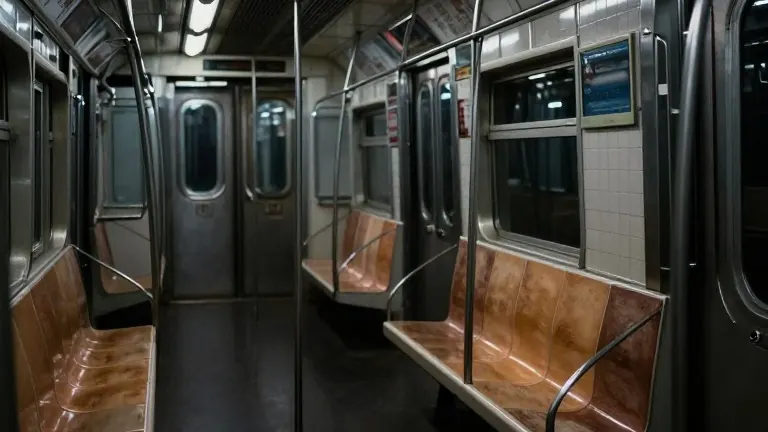
The incident occurred on May 1, 2023, when Jordan Neely, a Black man who had performed as a Michael Jackson impersonator for years, boarded a subway car in a state of crisis. Shouting threats and frightening passengers, he was eventually restrained by Daniel Penny, a white former Marine. Penny held Neely in a chokehold for six minutes until he died. The video of the encounter quickly became a focal point for national debate regarding race, policing, and mental health care.
Giridharadas writes that the tragedy illustrates a pervasive sense of abandonment in American society. He suggests that when institutional support fails, individuals often take matters into their own hands, frequently with tragic results. The author contends that this dynamic is visible across political lines, as people feel the need to fill the void left by unresponsive systems.
The legal outcome for Penny arrived in December 2024, when he was acquitted of criminally negligent homicide. A jury hung on a second-degree manslaughter charge, leading the prosecution to dismiss that count. In the days following the verdict, Penny’s public profile rose sharply. He attended the Army-Navy game alongside President-elect Donald Trump and Vice President-elect JD Vance. Shortly after, the Silicon Valley venture capital firm Andreessen Horowitz offered him a position as a partner on its American dynamism team, which invests in startups focused on weapons systems and drones.
The book explores the personal histories of both men to explain how they arrived at that subway car. Giridharadas notes that Neely had a criminal record spanning more than a decade, beginning with minor offenses common to homelessness in New York, such as jumping turnstiles. In later years, his record included more serious violent crimes, including assaults. Neely was eventually placed in an alternative to incarceration program in the Bronx, a restorative option for individuals with substance issues. However, he walked out of the facility, leaving a warrant for his arrest unresolved.
In April 2023, weeks before his death, Neely was seen acting erratically at the Coney Island subway terminal. Outreach workers and police attempted to manage the situation but did not immediately recognize him as the man with the outstanding warrant. He fled into the night and was found dead on a different subway car floor shortly after. Giridharadas describes Penny’s origins in West Islip, Long Island, as a community shaped by white flight from the city. The author characterizes these suburbs as middle-class enclaves that maintained a complex, often contemptuous relationship with the urban center they had left.
Giridharadas also addresses the political polarization surrounding the case. He observes that Penny appeared ideologically neutral to his friends and family, yet he was quickly adopted as a symbol by the right. The author draws a parallel to the case of Luigi Mangione, who killed UnitedHealthcare CEO Brian Thompson in late 2024. Both narratives, Giridharadas argues, rely on the premise that the system failed and an individual had to step in. This sentiment, the book suggests, has become a common thread across the political spectrum, from the far left to the far right.
The book concludes with an assessment of Penny’s demeanor following the incident. Giridharadas states that he did not sense remorse or sadness in brief conversations with Penny, including a meeting at a victory party held a year and a half after the killing. The author points to bodycam footage and interrogation records, noting that Penny seemed more curious about his own position than the fate of the man he had killed. The work frames the Neely and Penny story not just as a single tragedy, but as a reflection of how American cities manage, and often neglect, their most vulnerable residents.
Source: WCBE · original report published
More News · Columbus news · Report a business · Got a Story?