
Small Skin Changes Can Signal Cancer, Doctors Warn
Physicians advise watching for bleeding moles and sores in hidden areas, noting that even a millimeter of growth warrants a checkup.
By Emily Brooks ·
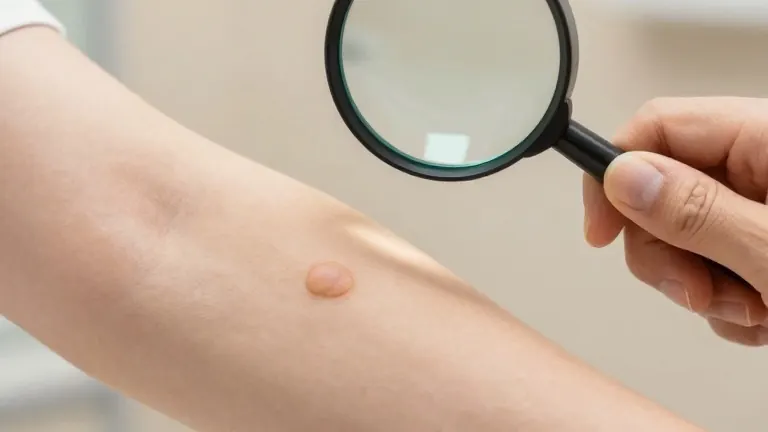
Skin cancer often hides in plain sight, appearing in forms that go unnoticed until the disease advances.
Dr. Rhea Rogers, a board-certified physician, identifies non-healing sores and moles that bleed easily as primary warning signs. She notes that people frequently fail to track how existing moles change over time. Doctors evaluate lesions using the ABCDE method, which stands for asymmetry, border, color, diameter, and evolution. Rogers asks patients to observe if a spot looks different to them than it did in the past.
Gerontologist “Sam” Cradduck emphasizes that minor shifts matter. She states that a millimeter of growth can be a major indicator. Patients should monitor for changes in size, symmetry, or bleeding. These small variations require attention even for spots that have existed for years.
While public health messages often focus on sun-exposed areas like the arms and face, Rogers says cancer can develop in less visible spots. She points to the area behind the ears, between the toes, and underneath the nails as common hiding places. The scalp is another difficult area for self-examination. Rogers recommends that a partner or a doctor inspect these hard-to-reach zones during a physical exam. She warns that these growths do not always look frightening, which makes them dangerous because people ignore them.
Aging expert Amy O’Rourke describes a personal experience that illustrates the need for full-body checks. She visited a dermatologist about a brown spot on her cheek. A full-body scan revealed a squamous cell carcinoma on top of her head. O’Rourke underwent surgery to remove the cancer. She notes that approximately three-quarters of her family has had skin cancer. Rogers says fair skin, age, and family history are risk factors. She attributes the risk to a combination of genetic and environmental elements.
Rogers explains that UVA and UVB light is invisible and can pass through glass windows. Melanoma is typically linked to deep, intermittent sunburns. It spreads quickly, so early detection is vital. Squamous cell and basal cell cancers often present as pinkish, itchy sores or shiny bumps rather than dark moles. Rogers also corrects a common belief that African Americans do not need sunscreen. She says sunscreen protects the cells and DNA from damage.
In addition to applying sunscreen, Rogers and the show hosts suggest using sun-protective clothing. This includes rash guards, UV-blocking clothing, and wide-brimmed hats. Rogers advises patients to check their insurance plans to see if an annual dermatology exam is covered, similar to a well-woman visit. During that visit, patients should request a full body exam and ask about mole mapping to track changes over time.