Air Force Major Jason Watson Faces Ten Charges After Capitol Protest
The officer has been in solitary confinement for two months while waiting for a court-martial.
By Ethan Mitchell ·
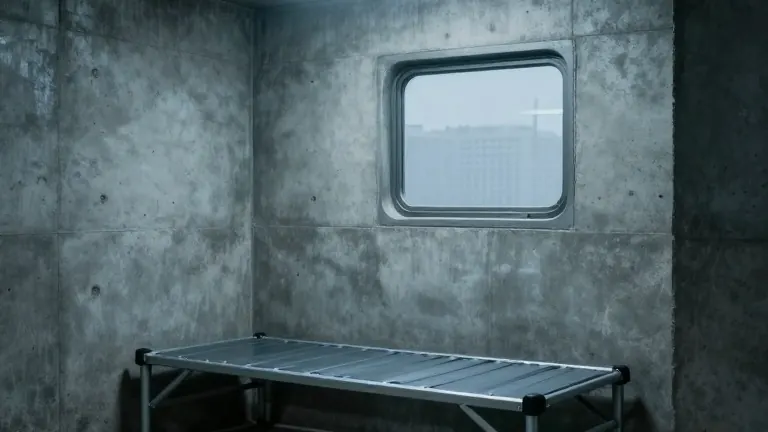
Major Jason Watson is sitting alone in a military cell. He has been in solitary confinement for almost two months. He has not been convicted of a crime. Under military law, he is presumed innocent. His attorney says he is isolated for every meal and exercise period.
Watson faces ten charges under three articles of the Uniform Code of Military Justice. His lawyers confirmed these details in a public statement. Three charges fall under Article 88, which covers using contemptuous words against the president. Five charges are under Article 92 for failing to obey orders or regulations. Two charges are under Article 133 for conduct unbecoming an officer.
The sequence began on July 1. Watson walked up the House steps of the U.S. Capitol in uniform. He held a sign that read Impeach. Convict. Remove. He was calling for the removal of President Trump and Vice President Vance. Capitol Police arrested him. Local prosecutors in D.C. dropped their charges. The Air Force took him from the courthouse into custody and restricted him to base. In August, Watson appeared on CNN to repeat his call for removal. The next day, the Air Force ordered him into pretrial confinement.
Watson’s legal team argues that the isolation is harsher than necessary. They note that solitary is usually reserved for violent or disobedient inmates. Even then, it typically lasts only a few days or a week. At his Article 32 hearing, the hearing officer stated the isolation was required because Watson could not be housed with civilian inmates. Article 13 of the UCMJ states that pretrial confinement should be no more rigorous than necessary to ensure the defendant's presence.
Article 88 is rarely used. A CNN review found only two convictions under this article since the modern military code began in 1950. The military’s Manual for Courts-Martial suggests that strong criticism in political discussion should not be charged unless it is personally contemptuous. Watson told the hearing officer that discomfort is not contempt. He pointed to the case of Marine Lt. Col. Stuart Scheller. Scheller was charged under Article 88 in 2021 for posting videos in uniform. He pleaded guilty and received a letter of reprimand and a $5,000 forfeiture of pay.
Watson’s lawyers said the law will not make the same word a virtue in one officer’s mouth and a felony in another’s. He stands on the principle that an officer’s oath is to the Constitution, not to a specific president. Enlisted members promise to obey the president’s orders. Officers swear to support and defend the Constitution and faithfully discharge their duties. Watson said he acted out of duty, not partisanship.
The military has not yet set a trial date. Watson remains in his cell at the base. His family has been limited in their contact with him. The case has drawn attention to how the service branches handle dissent from commissioned officers.
Source: Columbus Free Press · original report published
More Politics · Columbus news · Report a business · Got a Story?