Final Week Ad Spend Maps Out House Control Battle for Columbus and Ohio
New spending data indicates Democrats are favored in 220 House seats ahead of the November 3 election, with heavy investment in redrawn districts.
By Nadia Khalil ·
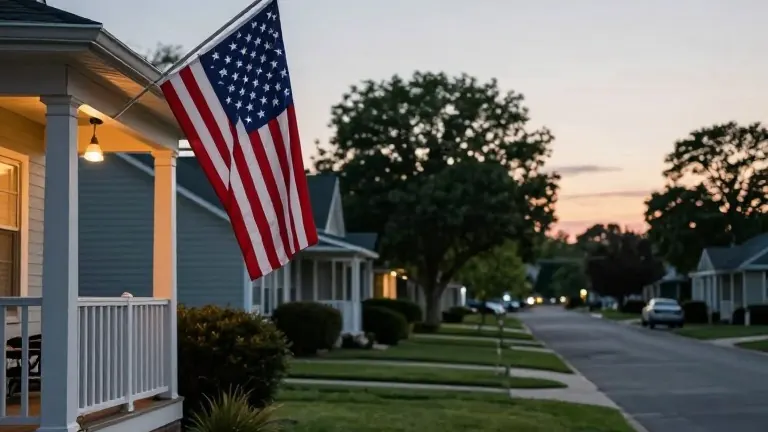
Voters in Columbus and across the country will cast ballots for their U.S. House representatives on November 3. New advertising data released in the final week of the 2026 midterm cycle shows that the competition for congressional seats is wider than previously estimated. Both political parties are committing six-figure sums to specific districts, signaling a tight race for control of the House.
An analysis by NPR indicates that 70 districts will see at least $100,000 in final-day advertising from both parties. The data suggests the core of the election is not simply whether Democrats gain seats, but how many they take. The Cook Political Report rates Democrats as the favorite in 220 seats. It lists 17 seats as toss-ups and another 30 as competitive but leaning toward the Republican Party.
Republicans currently hold a narrow 218-214 majority in the House. Historical midterm trends suggest the party in power often loses seats. The latest polling from NPR, PBS News, and Marist shows Democrats holding a 10-point advantage among registered voters on the generic congressional ballot. That margin narrows to 8 points among likely voters. These numbers suggest a substantial shift in party control is likely.
Economic concerns drive much of the voter sentiment. Cost of living remains the top issue, fueled by rising gas prices, new tariffs, and the ongoing conflict in Iran. A record number of members of Congress announced retirements this year. Primary elections have also shown an anti-incumbency streak, further changing the field of candidates.
Redistricting has played a major role in shaping the current map. A Supreme Court decision that reduced parts of the Voting Rights Act allowed for mid-decade map changes. Republicans shifted boundaries to add conservative voters to districts held by Democrats. This affects Ohio’s 9th District, represented by Marcy Kaptur. Similar redistricting occurred in California, where Democrats adjusted lines to target Republican-held seats.
Spending is concentrated in specific regions. Michigan’s 7th District and North Carolina’s 1st District have over $12 million in planned advertising each. Florida’s 14th, 22nd, and 25th Districts, New York’s 17th District, and Iowa’s 2nd and 3rd Districts also see heavy investment. Other costly races include Alabama’s 2nd and Tennessee’s 9th Districts, where Republicans recently redrew lines. Kentucky’s 6th and Arkansas’ 2nd Districts, which voted for Donald Trump by more than 10 points in 2024, also feature significant ad buys.
The 70 districts with heavy spending from both parties voted for Trump by an average of 9 points in the 2024 election. Sixty districts are listed as priorities by both the Democratic and Republican House campaign arms. This reflects the current unpopularity of the administration among voters. However, not every contested seat will be close. Some districts listed as in play gave Trump nearly 60% of the vote in 2024 and have seen little advertising.
Four districts that split the 2024 presidential and House vote have seen Republicans reduce their ad reservations. These include districts held by Adam Gray in California, Nellie Pou in New Jersey, and Marie Gluesenkamp Perez in Washington. Retiring Representative Don Bacon’s district in Nebraska is also in this group. Only Shomari Figures in Alabama and Darren Soto in Florida, among the redistricted targets, are currently rated as favoring Republicans.
Millions of voters have already cast early ballots for the November 3 election. The final hours of the campaign will feature intense messaging in the dozens of races identified as key investment areas. The outcome will determine which party controls the House for the next two years. The ad spending data provides the clearest current picture of where the battle lines are drawn.
More Politics · Columbus news · Report a business · Got a Story?