Historian explains origin of Irish border in 1920s
Dr. Cormac Moore details how political maneuvering and a shelved boundary commission fixed the line dividing the island.
By Emily Brooks ·
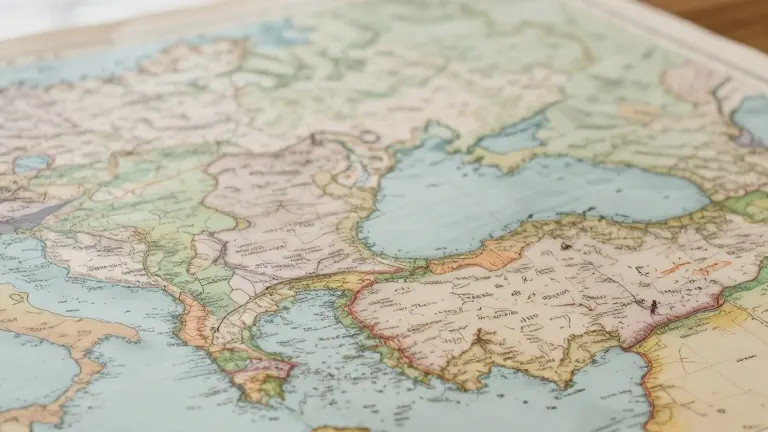
The Irish border has remained unchanged for more than a century, dividing towns, farmlands, and families without a clear historical rationale that satisfies all residents. Dr. Cormac Moore, a historian and the founder of HistoryLink, discussed the specific political events that solidified the current boundary on The Pat Kenny Show.
The initial plan in 1919 by the British government proposed two separate parliaments, with all nine counties of Ulster assigned to Northern Ireland and the remaining 23 counties to Southern Ireland. Unionist leaders opposed this arrangement because it would have created a demographic split of 55 percent Protestants to 45 percent Catholics. They argued that this majority would not be secure and insisted on limiting Northern Ireland to the six historical counties of Ulster: Derry, Down, Armagh, Antrim, Fermanagh, and Tyrone.
The county outlines were established in the 17th century under King James, which resulted in farms and towns spanning multiple counties. For the first few years after partition, the border functioned primarily as an administrative hurdle with little impact on daily life. However, the erection of customs posts changed the reality for residents. Journeys that previously took minutes became lengthy, and travel was restricted to specific crossing roads. The irregular nature of the border made it difficult to staff and monitor, a fact that prompted Prime Minister Margaret Thatcher to express a desire to straighten the line during her tenure.
A boundary commission was established to address these issues, but it did not convene until late 1924 due to civil war in the south and political turmoil in Britain. When the commission finally met, it became clear that only minor cosmetic changes would be suggested. The free state commissioner, Richard Feetham, determined there was insufficient justification to move Newry to the south, despite the town being 75 percent Catholic. The proposal included moving small parts of Armagh and Crossman Glen south, as well as sections of Tyrone, but the free state government would have lost wealthy areas of East Donegal and North Monaghan.
The report was leaked by the newspaper Morning Post on November 25, 1920s. W.T. Cosgrave, the head of the free state government, traveled to London to have the report shelved. This decision stopped the proposed adjustments, leaving the border exactly as it exists today.