UN delegates agree to two more years of talks on AI killer robots
Delegates in Geneva extended discussions to 2028 without committing to the binding rules requested by the UN Secretary-General.
By Emily Brooks ·
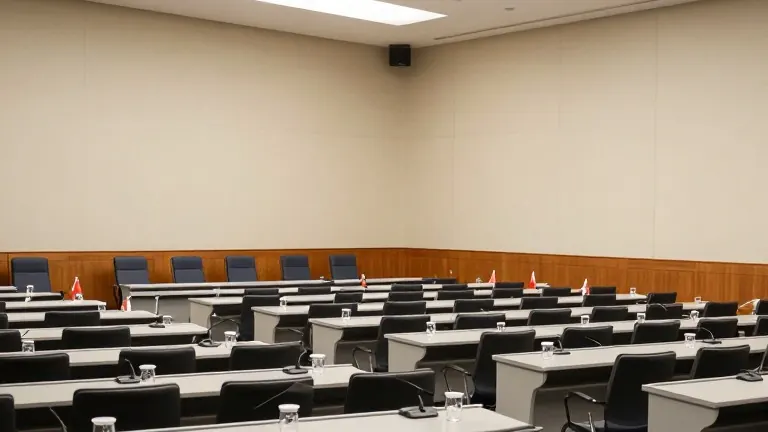
Residents of Columbus will not see immediate changes to global military standards, but the outcome of the U.N. conference in Geneva this week signals that international rules on artificial intelligence in warfare will not be finalized until at least 2028. Scores of nations ended the five-day session by agreeing to continue working on a possible accord, rather than adopting the strict regulations sought by many governments and advocacy groups.
The delegates reached a compromise to elaborate on a potential agreement by 2028. U.N. Secretary-General António Guterres had pushed for a legally binding deal to be launched this year. Instead, the final text reflects a softer consensus, allowing nations more time to negotiate specific limits on lethal autonomous weapons systems.
Izumi Nakamitsu, the U.N. high representative for disarmament affairs, described the result as a significant achievement while acknowledging the mixed feelings it generated. She noted the scenario was a glass half full or half empty, given Guterres' original hopes for a concrete legal framework before he leaves office at the end of the year.
Critics argued that major military powers, including the United States and Russia, blocked stronger language in the final document. Beatrice Fihn, founder of the international law advocacy group Lex International, stated that the decision amounts to pushing the issue down the road for two more years. Max Tegmark, a machine learning specialist at the Massachusetts Institute of Technology, observed that states have agreed to just talk about the issue for the 14th year while these weapons enable atrocities.
Before the meeting, seven countries, including Brazil, Austria, Belgium, Ireland, Mexico, New Zealand, and Panama, proposed launching negotiations on a rulebook. Ambassador Frederico Meyer of Brazil said technology is moving faster than diplomacy, noting that diplomats are very slow. The proposal fell short of achieving a mandate for immediate binding rules.
The negotiations took place under the Convention on Certain Conventional Weapons, which has been ratified by 128 countries. Decisions within this framework require consensus, meaning any single country can prevent an agreement. This structure often leads to outcomes based on the lowest common denominator among participating nations.
Advocacy groups and humanitarian organizations have framed the issue as an urgent debate, urging quick action before AI weapons become too commonplace to regulate. Pope Leo XIV has also called for prompt measures. While activists note that armed drones capable of independent strikes have been deployed in some conflict zones, widespread rollout has not yet occurred. The next round of discussions is scheduled to continue through 2028.
More World · Columbus news · Report a business · Got a Story?