Columbus voters face new ID rules and long lines on Election Day
With polls open from 6:30 a.m. To 7:30 p.m., Franklin County residents navigate updated ballot procedures and a crowded ballot that includes a special Senate race and a governor's contest.
By Emily Brooks ·
Columbus, Ohio, and surrounding communities in Franklin County are preparing for a pivotal Tuesday in the midterm elections. Polling places across the region, including those in Dublin, Delaware, Grove City, Reynoldsburg, and Hilliard, opened their doors at 6:30 a.m. Local time and will remain open until 7:30 p.m. This specific window is critical for voters in the area, as the state has adopted a new congressional map following mid-decade redistricting, which may influence how local votes align with broader national trends. This election serves as a referendum on President Donald Trump's second term, with many voters expressing frustration over high prices and an unpopular war with Iran.
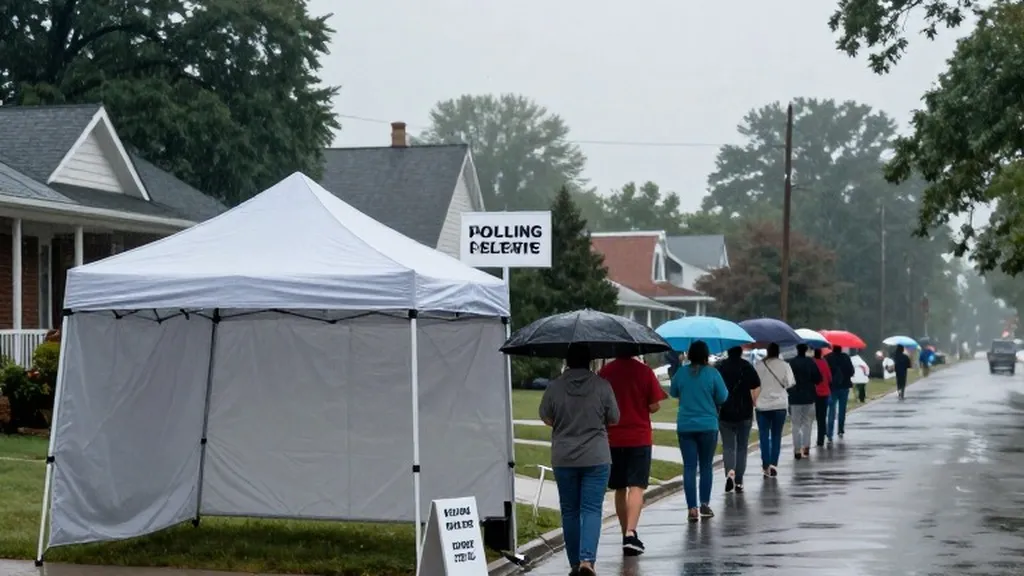
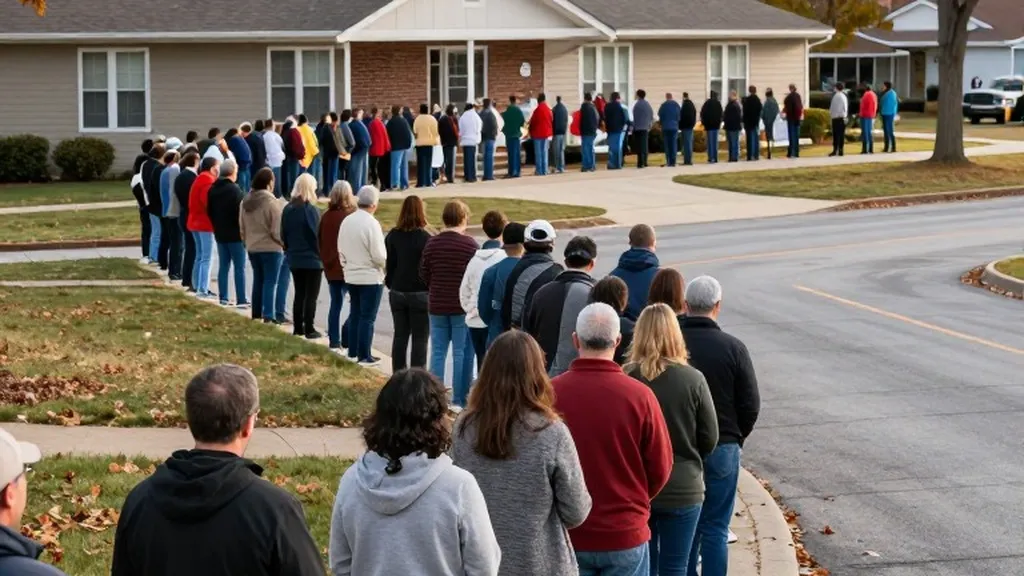
One of the most significant changes for Ohio voters this year is the implementation of new identification rules. Issue 3, a ballot measure requiring photo identification to vote, is on the ballot in Ohio. While specific enforcement details for the current cycle are being finalized, voters are advised to check their state election office or vote.gov for precise ID requirements before heading to their assigned polling place. The U.S. Government website, USA.gov, emphasizes that anyone in line when polls close is entitled to vote, a rule that has become a focal point for local election officials aiming to manage traffic efficiently. In Columbus, long lines have been anticipated due to the combination of the new ID rules and the high volume of voters seeking to cast ballots for multiple offices.
The ballot in Franklin County is particularly dense, featuring every U.S. House seat in the state, the governor's office, and a special election for the U.S. Senate. Ballotpedia confirms that there is no regular U.S. Senate election in Ohio this year, but a special election is being held for the remainder of the term that was originally occupied by Vice President JD Vance, who was elected to that seat in 2022. The Associated Press highlights that the special Senate race features Republican incumbent Jon Husted against Democratic former Senator Sherrod Brown. This matchup is part of a broader national fight for control of the Senate, where Democrats need a net gain of four seats to secure a majority. Republicans currently hold 53 seats, while Democrats hold 45, plus two independents who caucus with Democrats.
Beyond the federal races, Ohio voters are deciding who will lead the state for the next four years. The governor's race is an open seat, with no incumbent running for re-election. The matchup includes Republican Vivek Ramaswamy and Democrat Amy Acton. The race has drawn national attention, partly due to campaign advertisements and debates that have centered on economic concerns. Ramaswamy's campaign faced backlash over an ad featuring Acton's estranged mother, a detail that has made the local race a key test case for Republican messaging in swing states. Voters in Columbus and its suburbs are weighing these candidates alongside state and local offices and measures that vary by county, creating a complex ballot that requires careful review.
The logistical aspects of voting have drawn increased attention from federal agencies. The U.S. Postal Service has added hours, staff, and special lines to ensure that mail ballots are counted on time. This is particularly relevant in states that rely heavily on mail-in voting, such as California, Oregon, and Utah, which have later closing times or rely primarily on mail. For Ohio voters, the focus remains on in-person voting, but the federal efforts to support mail ballots reflect a broader administrative push to handle the high volume of early and mailed votes. More than 57 million people had already voted as of Monday, surpassing the early vote totals from four years ago in many closely watched states.
Legal challenges have also shaped the election administration landscape. A federal judge on Monday temporarily barred the Trump administration from carrying out a plan it says would prevent noncitizen voting. Critics argue that the plan risks disenfranchising eligible voters and infringes on states' authority over elections. In California, a judge ordered the administration to stop demanding that election officials segregate ballots cast by people on lists of suspected noncitizens. These legal developments have created uncertainty for election officials in several states, including Ohio, where local officials are monitoring federal actions closely. The Associated Press notes that Democrats fear interference and intimidation as the Justice Department threatens to prosecute local election officials, a concern that has led to increased security and scrutiny at polling places nationwide.
The mood among voters in Columbus and across the country is described by the Associated Press as one of caution and high stakes. Republicans are bracing to lose the House and are fighting to hold the Senate, while Democrats are described as cautiously optimistic. The AP-NORC polling indicates that 35% of U.S. Adults approve of Trump's job performance, while about seven in 10 say the country is heading in the wrong direction. Most respondents blame the president for high prices, a sentiment that resonates with local voters in Franklin County who are dealing with rising costs for goods and services. The election is not just about who controls Congress, but also about the direction of the country in the final two years of Trump's second term.