Franklin County voters decide Ohio governor and House seats today
Polls in Columbus, Dublin, and other Franklin County communities open at 6:30 a.m. For a midterms ballot featuring a special Senate race and new congressional maps.
By James Anderson ·
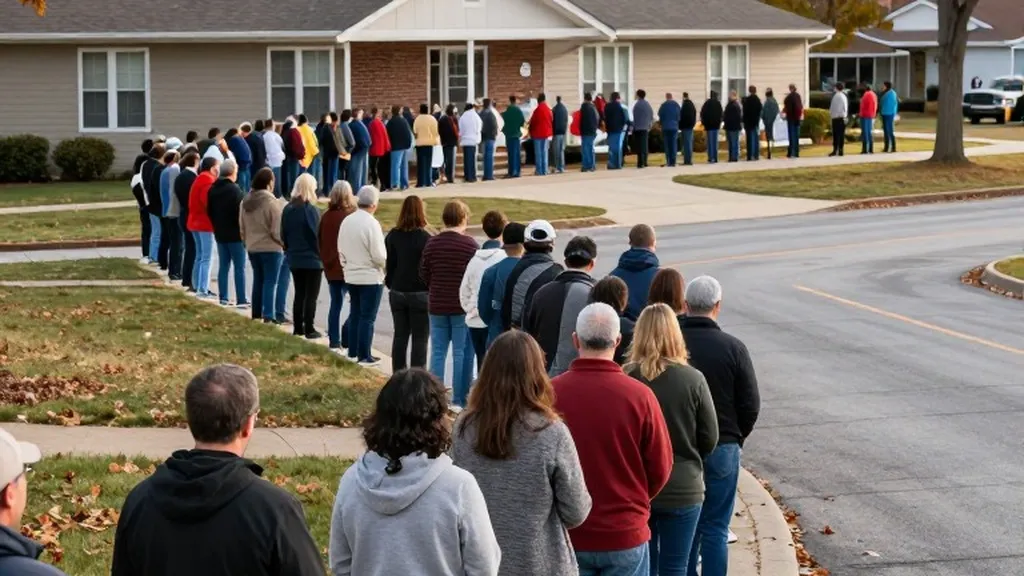
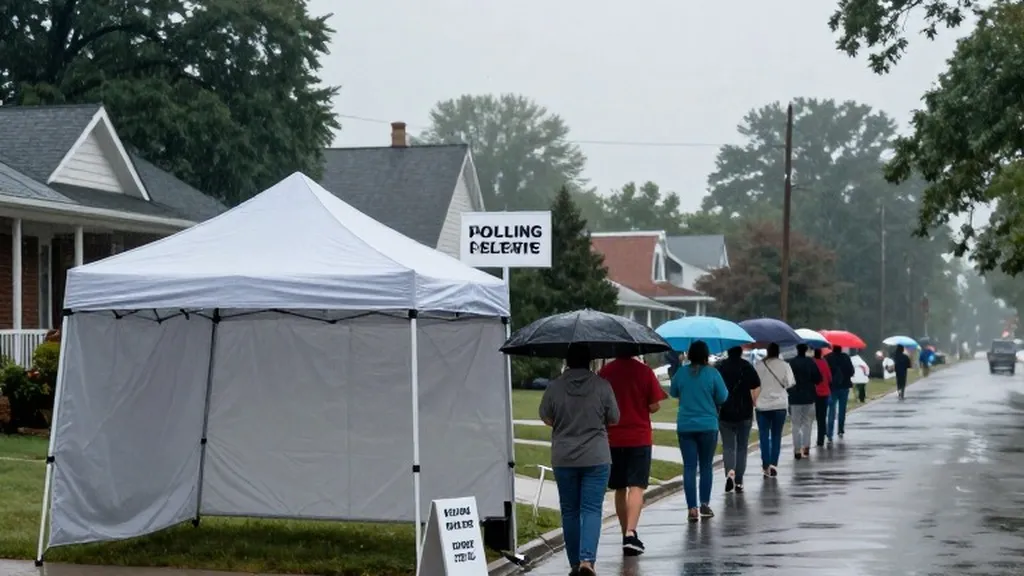
Voters in Franklin County, Ohio, will cast ballots today from 6:30 a.m. To 7:30 p.m. Local time to decide key state and federal offices. These hours apply to polling locations across the county, including communities such as Columbus, Dublin, Delaware, Grove City, Reynoldsburg, and Hilliard. Residents can locate their specific voting place by visiting vote.gov or contacting the state election office. Anyone who is in line when polls close is entitled to cast a vote, and identification rules vary by state, so voters are advised to check local requirements before heading to the polls.
The ballot for Franklin County voters includes every U.S. House seat in Ohio, which are all up for election this year. Ohio is one of the states using new congressional maps following mid-decade redistricting, a change that may influence how districts vote compared to previous cycles. Additionally, the governorship is on the ballot as an open seat with no incumbent running. Parties on the ballot include the Democratic, Independent, Libertarian, and Republican parties. Statewide, 36 governorships are contested, and Democrats are hoping to hold a majority of governorships for the first time in two decades, a status Republicans have held since 2010.
In Ohio, the race for governor features Republican Vivek Ramaswamy against Democrat Amy Acton. The Associated Press notes that Ramaswamy's campaign faced backlash over an advertisement featuring Acton's estranged mother. This race is part of a broader national contest where Republicans hold 26 governor's offices and Democrats 24 heading into the election. Of the governorships on the ballot, each party holds 18. Nineteen of these races have no incumbent on the ballot, including Ohio, where the current governor is not running again. The outcome of these races will determine which party controls statehouses across the country for the next four years.
Franklin County voters also face a special election for a U.S. Senate seat. Ballotpedia confirms that while there is no regular U.S. Senate election in Ohio this year, a special election is taking place to fill the remainder of the term for which Vice President JD Vance was elected in 2022. The Republican candidate in this race is incumbent Jon Husted. The Associated Press identifies this matchup as a key contest, pairing Husted against Democratic former Senator Sherrod Brown. This special election is one of two such races nationwide, the other being in Florida. Winners of Senate races begin six-year terms on January 3, 2027, though special election winners serve only the remainder of the previous term.
Nationally, all 435 seats in the U.S. House of Representatives are up for grabs. Republicans currently hold 218 seats, while Democrats hold 214, with one independent and some vacancies. Democrats need a net gain of three districts to achieve a majority, whereas Republicans can lose no more than two seats to maintain their majority. Ballotpedia counts 46 battleground districts, with 25 held by Democrats and 21 by Republicans. The Associated Press describes this election as a referendum on President Donald Trump's second term, with many voters expressing concern over high prices and an unpopular war with Iran. Polls from AP-NORC indicate that 35 percent of U.S. Adults approve of Trump's job performance, while about seven in ten say the country is heading in the wrong direction.
The Senate race involves 35 of 100 seats, including 33 regular elections and two special elections. Republicans hold 53 seats, Democrats 45, and two independents caucus with Democrats. Democrats need a net gain of four seats to take control of the Senate, while Republicans can afford to lose only two. Key battlegrounds include Georgia, where Senator Jon Ossoff faces Republican Representative Mike Collins, and Michigan, where Republican former Representative Mike Rogers competes against Democrat Abdul El-Sayed. In Maine, Senator Susan Collins faces Democratic former state Senate President Troy Jackson, a race that has become competitive due to economic strain and tariffs. The Trump administration has also filed a lawsuit in Alaska related to the certification of the Senate result, adding another layer of complexity to the administration of these elections.
Early voting has been high, with more than 57 million people having already voted as of Monday, surpassing the early vote totals from four years ago in many closely watched states. The U.S. Postal Service added hours, staff, and special lines to ensure that mail-in ballots are counted on time. A federal judge temporarily barred the Trump administration from carrying out a plan intended to prevent noncitizen voting, a move critics said risked disenfranchising eligible voters. Another judge ordered the administration to stop demanding that California election officials segregate ballots cast by people on lists of suspected noncitizens. These legal actions are part of a broader debate over voting integrity, with Trump continuing to make claims about voting fraud, including that noncitizens vote in large numbers.
The financial scale of these elections is historic, with the 2026 races likely to be the most expensive in history. Republican committees outraised and outspent Democratic committees, aided by Trump-affiliated groups and support from Elon Musk. However, at the candidate level, Democrats outraised their opponents. An analysis of AdImpact data found that 88.1 percent of Republican general election TV ad spending went to states and districts that Trump won in 2024, including more than $850 million in areas where he won by 10 points or more. This spending pattern reflects a strategy to consolidate support in solidly Republican areas while Democrats focus on flipping key districts and states.