Columbus voters weigh control of Congress, Ohio governorship today
With polls open in Franklin County, residents decide the balance of power in Washington and the next state executive in a midterm race focused on cost of living and oversight.
By James Anderson ·
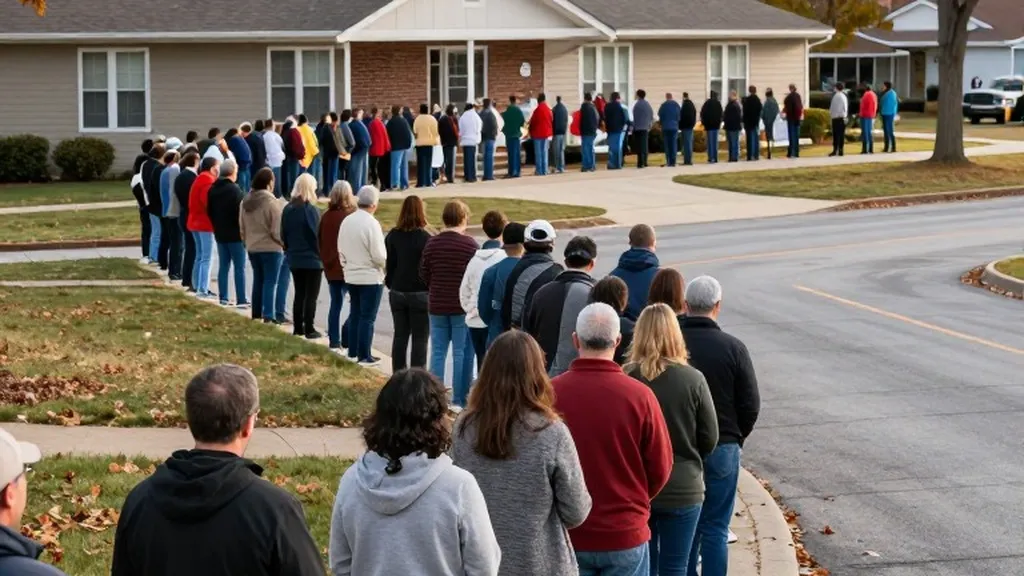
Voters in Columbus and across Franklin County are casting ballots in the 2026 midterm elections, which will determine control of the U.S. House and Senate for the final two years of President Donald Trump's term. Polls in Ohio are open from 6:30 a.m. To 7:30 p.m. Residents in Dublin, Delaware, Grove City, Reynoldsburg, and Hilliard are participating in federal and state races that could shift the balance of power in Washington. The election is being described as a referendum on the president's second term, with many voters citing high prices and an unpopular war with Iran as primary concerns.
In the U.S. House, all 435 seats are up for election. Republicans currently hold 218 seats, while Democrats hold 214, with one independent and several vacancies. Democrats need a net gain of three districts to secure a majority, whereas Republicans can lose no more than two seats. Ballotpedia identifies 46 battleground districts nationwide, including 25 held by Democrats and 21 held by Republicans. The Associated Press notes that Republicans are bracing for potential losses in the House while fighting to hold the Senate. In Ohio, every U.S. House seat is on the ballot, with new congressional maps in effect following mid-decade redistricting.
The U.S. Senate race involves 35 seats, including 33 regular elections and two special elections. Republicans hold 53 seats, and Democrats hold 45, plus two independents who caucus with the minority. Democrats need a net gain of four seats for a majority. In Ohio, voters are deciding a special election for the remainder of the term previously held by Vice President JD Vance. Republican incumbent Jon Husted is on the ballot against Democratic former Senator Sherrod Brown. This is a key race in a state that President Trump won by 11.2 points in 2024. The outcome of this race, along with contests in Georgia, Iowa, and Kansas, will be critical for determining Senate control.
Statewide, Ohio voters are selecting a new governor in an open seat, as no incumbent is running for the office. Republican Vivek Ramaswamy is competing against Democrat Amy Acton. Ramaswamy's campaign faced recent backlash over an advertisement featuring Acton's estranged mother. The governor's race is one of 36 across the nation, where Republicans currently hold 26 offices and Democrats hold 24. Democrats are hoping to secure a nationwide majority of governorships for the first time since 2010. In Franklin County, local offices and ballot measures are also on the ballot, including a measure requiring photo identification to vote.
If Democrats win control of at least one chamber of Congress, investigations and possible impeachment proceedings become likely. House Democratic Leader Hakeem Jeffries, who would be the first Black speaker if his party takes the House, has outlined a 100-day agenda focused on the cost of living and oversight. A strong Democratic performance in the midterms would also boost the profiles of potential 2028 presidential candidates, including Gavin Newsom, JB Pritzker, and Pete Buttigieg. Conversely, a Republican hold could complicate the path for Vice President JD Vance, who is running in the Ohio special election.
More than 57 million Americans had already voted as of Monday, surpassing early vote totals from four years ago in many states. AP-NORC polling indicates that 35 percent of U.S. Adults approve of President Trump's job performance, while about seven in 10 say the country is heading in the wrong direction. Most voters in the poll blame the president for high prices. The 2026 elections are expected to be the most expensive in history, with Republican committees outspending Democrats at the committee level, aided by Trump-affiliated groups and Elon Musk. However, Democrats have outraised their opponents at the individual candidate level.
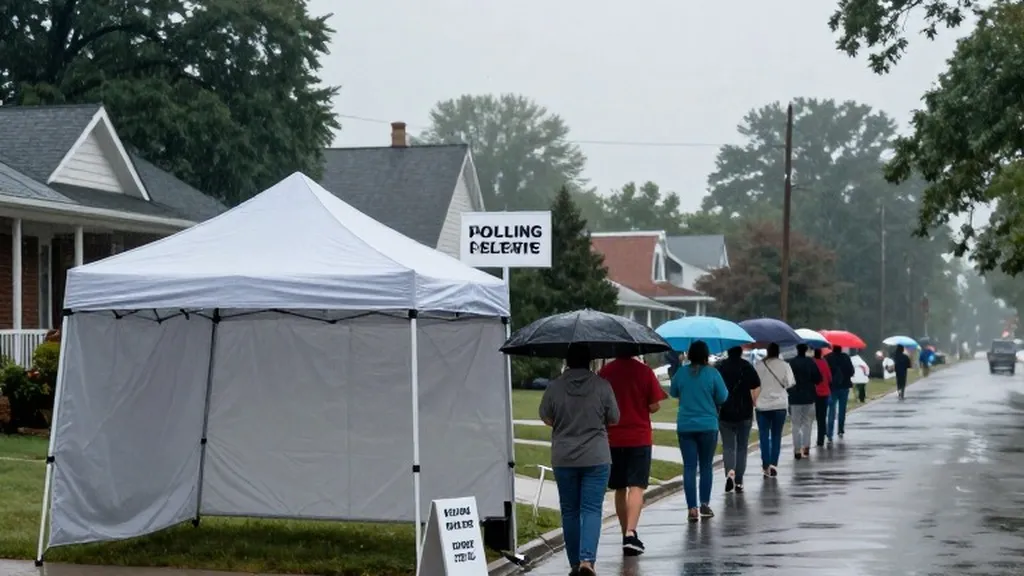
Administrative issues have also shaped the election day. A federal judge temporarily barred the Trump administration from implementing a plan intended to prevent noncitizen voting, a move critics said risked disenfranchising eligible voters. The U.S. Postal Service added staff and special lines to ensure mail ballots are counted on time. In Columbus, voters can find their polling place at vote.gov or through their state election office. Anyone in line when polls close at 7:30 p.m. Is entitled to vote. The election is being watched closely by Wall Street, with Reuters noting that results could impact investor concerns regarding AI spending and debt ceiling negotiations.
Local voters in Franklin County are deciding their representatives in a climate of heightened political stakes. The Associated Press quotes RNC Chairman Joe Gruters, who stated that everything depends on turnout and that Republicans plan to turn out their voters to win. DCCC Chair Rep. Suzan DelBene countered that the American people are angry and want change. In Columbus, the outcome of the governor's race and the congressional contests will shape the legislative landscape for the state. The new congressional maps in Ohio may alter the dynamics of local representation, as districts drawn in the mid-decade may not vote as expected. Voters in the county are engaged in a decisive moment for the next two years of federal policy and state leadership.
The election day atmosphere in Columbus is marked by a focus on economic issues and the direction of the country. President Trump held dozens of rallies in the lead-up to the vote, ending in Salina, Kansas, where he asked voters to pretend he was on the ballot. The administration has continued to make claims about voting fraud, including concerns about noncitizens voting, which has led to lawsuits in states like Alaska and California. In Ohio, the special Senate election and the governor's race are central to the state's political future. The results will determine who controls the levers of power in Washington and Columbus for the remainder of the current term.